
—— 皇宫、博物馆、清真寺,再到黑风洞的多巴胺世界From Palaces and Museums to the Dopamine-Fueled Batu Caves

吉隆坡的第一天,从热带晨光开启 The First Morning in KL: A Taste of the Tropics
酒店的早餐印象最深的是木瓜,甜得像阳光晒过的果肉,完美地提醒我们,这里是热带。由于出发前没时间做攻略,我们今天包车,决定用最放松的方式沉浸在这座城市的历史、文化和美食里。
Breakfast started with ripe papaya at hotel, sweet like sunshine-kissed fruit, reminding us that we were now in the tropics. Since we hadn’t planned much in advance, we booked a private car for the day—opting for a relaxed, immersive exploration of the city’s history, culture, and food.

国家皇宫:一抹皇家金色,带着英伦气质 The Royal Palace: A Golden Touch with a British Flair
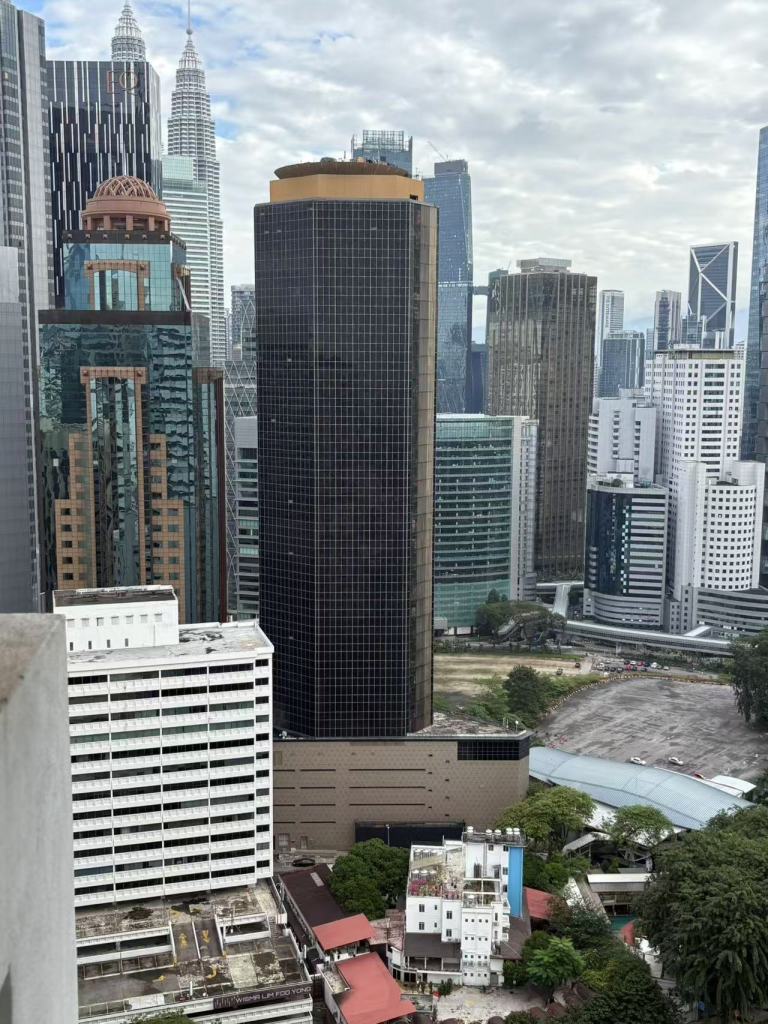
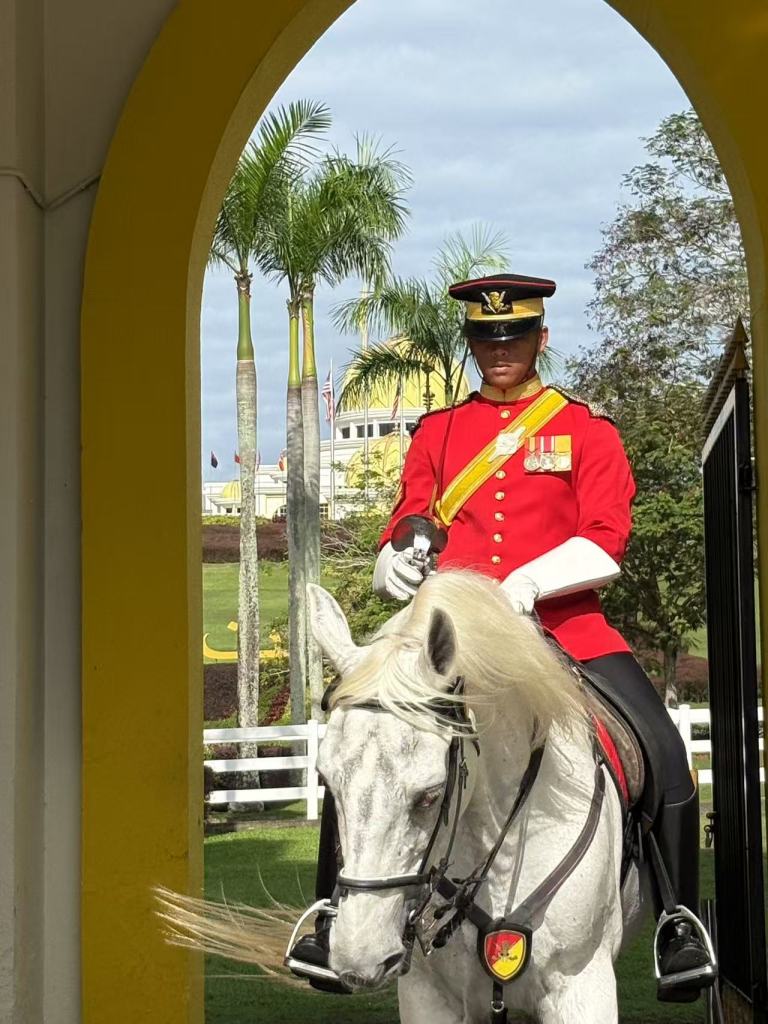
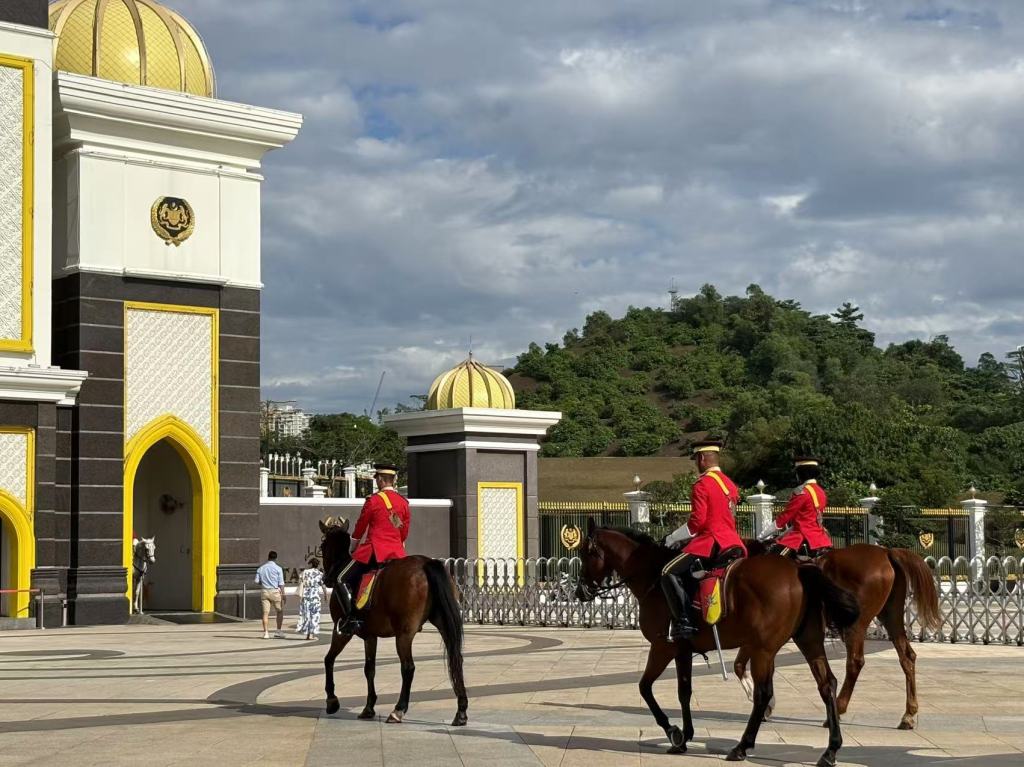
第一站,国家皇宫(Istana Negara)。这座宫殿是马来西亚国王的官邸,金顶闪闪发光,门口的皇家卫兵笔挺地站着,偶尔变换站姿。换岗仪式带着浓浓的英式风格,整齐划一的步伐、黑色军靴踏在地面上发出的清脆声响,让人恍惚间有种身处白金汉宫的错觉。
皇宫无法入内参观,但站在大门外,仍然能感受到马来西亚王室的庄重与威严。
Our first stop was Istana Negara, the official residence of the King of Malaysia. The golden domes gleamed under the morning sun, while royal guards stood tall at the gates, occasionally shifting positions. The changing of the guard had an undeniable British influence—precise movements, polished black boots clicking against the pavement—it almost felt like we were at Buckingham Palace.
Though we couldn’t enter, the grandeur of the palace was palpable even from the gates.

国家博物馆:马来西亚的前世今生 National Museum: The Story of Malaysia
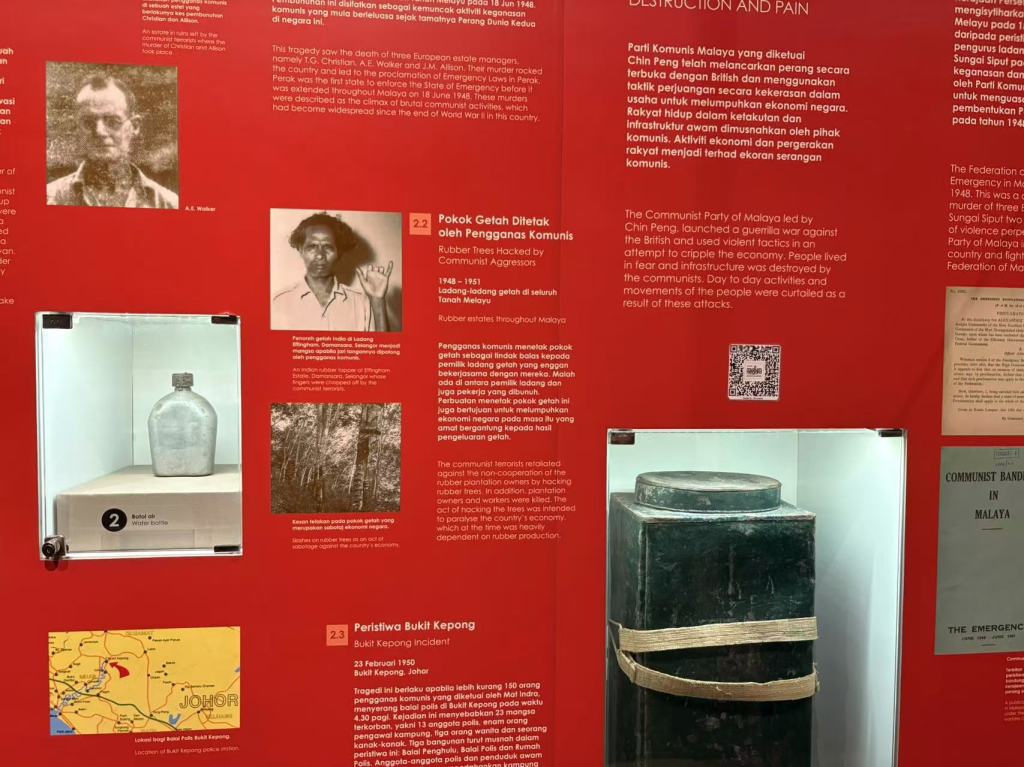
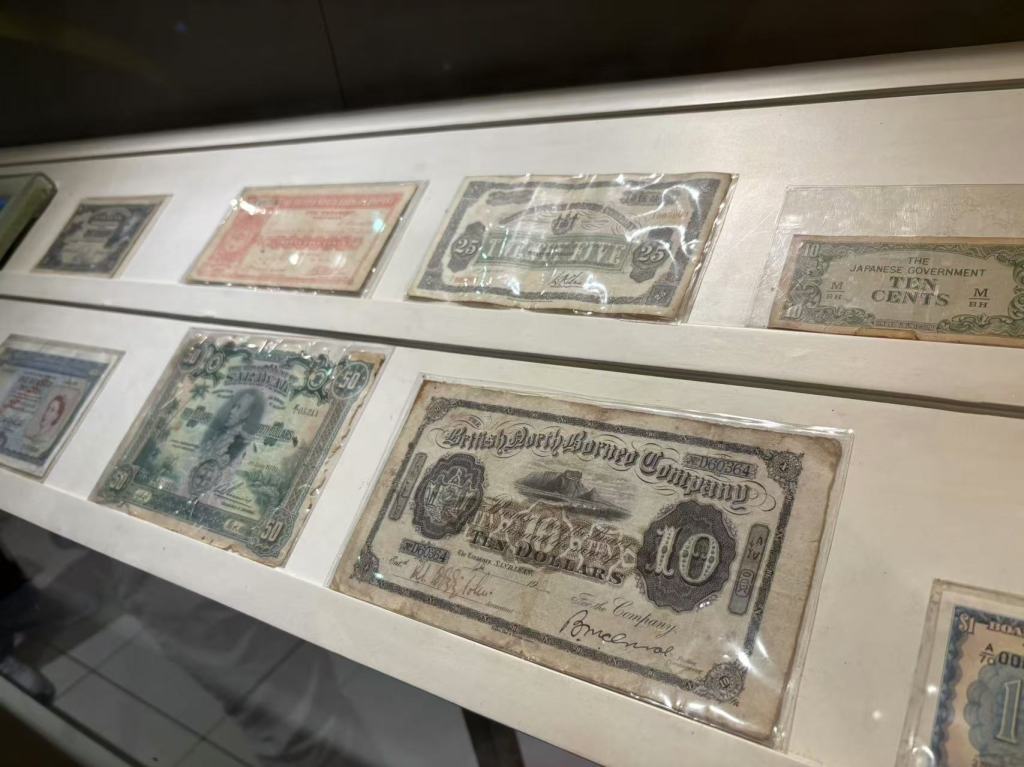
离开皇宫,我们来到国家博物馆(Muzium Negara)。游客不少,尤其是日本和韩国的旅行团,看起来他们对东南亚历史也颇感兴趣。
Next, we visited the National Museum (Muzium Negara), where a surprising number of Japanese and Korean tourists seemed equally fascinated by Southeast Asian history.
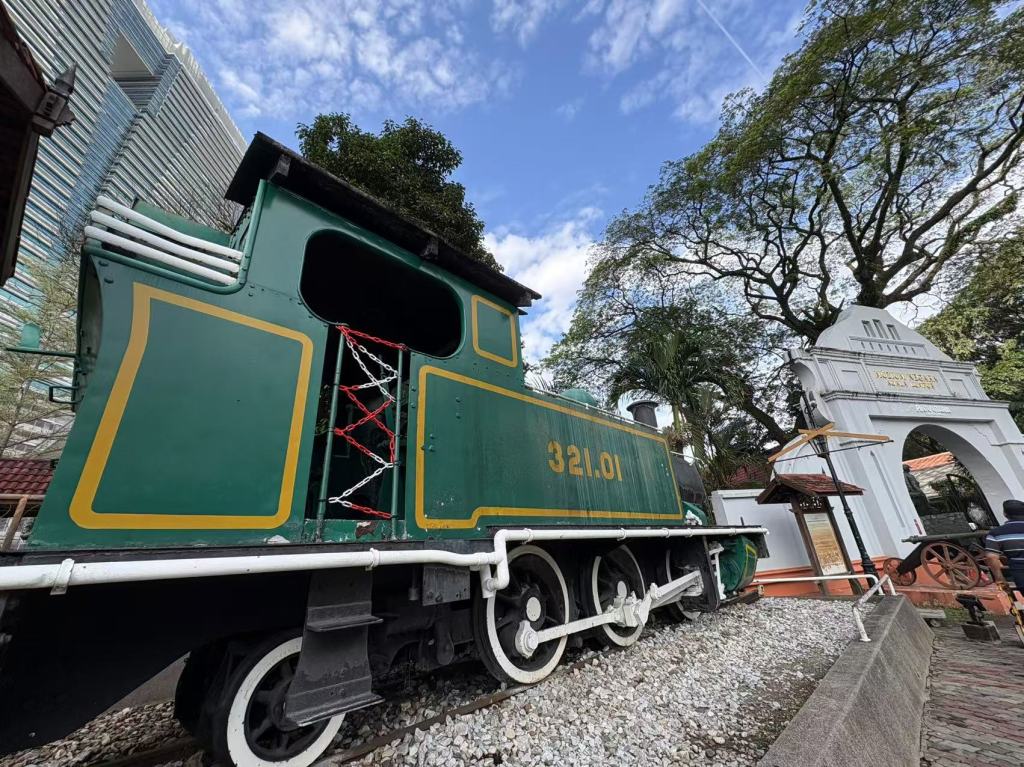

博物馆分为四个展馆,完整讲述了马来西亚的历史变迁:
- 史前时期:从石器时代到青铜器文明,馆内还展出了距今40,000多年的旧石器时代人类遗骸。
- 马来王国时期:15世纪的马六甲王朝曾是东南亚的贸易中心,与中国的海上丝绸之路息息相关。
- 殖民时期:葡萄牙、荷兰、英国轮番登场,吉隆坡从一个小小的矿业聚集地发展成如今的国际都市。
- 现代独立:1957年马来亚正式脱离英国独立。让人感叹这个多元文化国家管理的来之不易。
The museum was divided into four sections, providing a concise yet informative journey through Malaysia’s past:
- Prehistoric Era: From stone tools to bronze artifacts, with human remains dating back 40,000 years.
- Malay Kingdoms: The height of the Malacca Sultanate as a key player in maritime trade.
- Colonial Rule: The Portuguese, Dutch, and British shaping the city from a mining settlement into a commercial hub.
- Modern Independence: Malaysia’s hard-won journey to sovereignty in 1957.
It wasn’t the biggest museum, but it certainly packed a wealth of information—like flipping through an entire encyclopedia of Malaysia in just an hour.



国家清真寺:信仰、现代与游客的混响National Mosque: A Modern Take on Faith
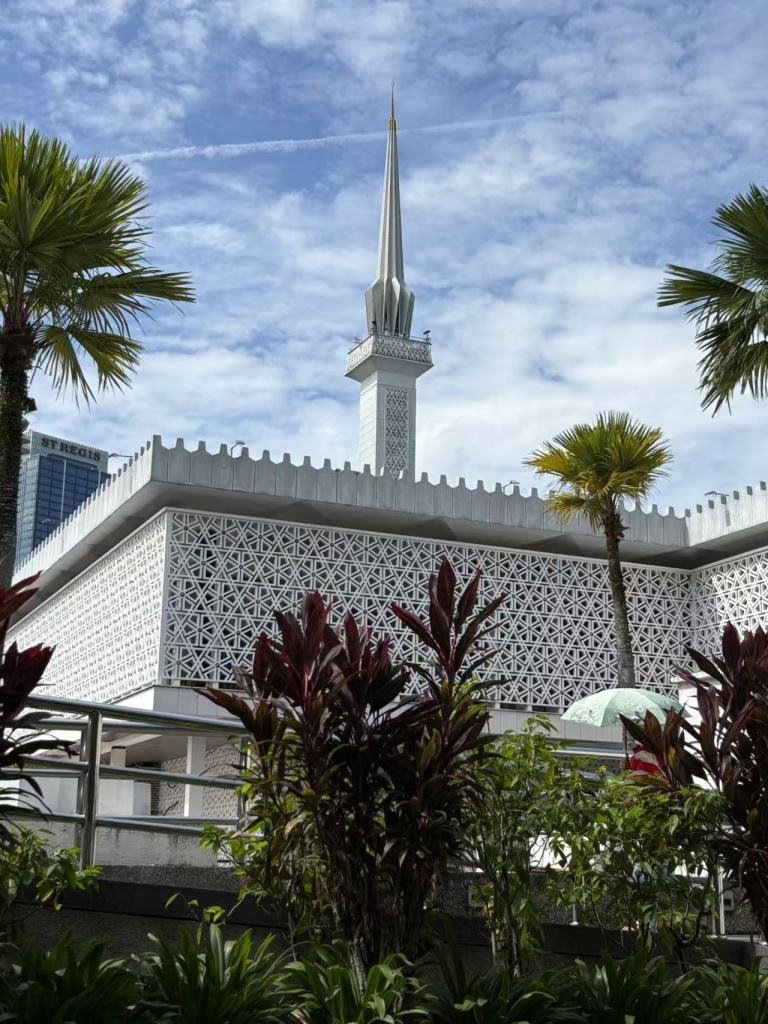
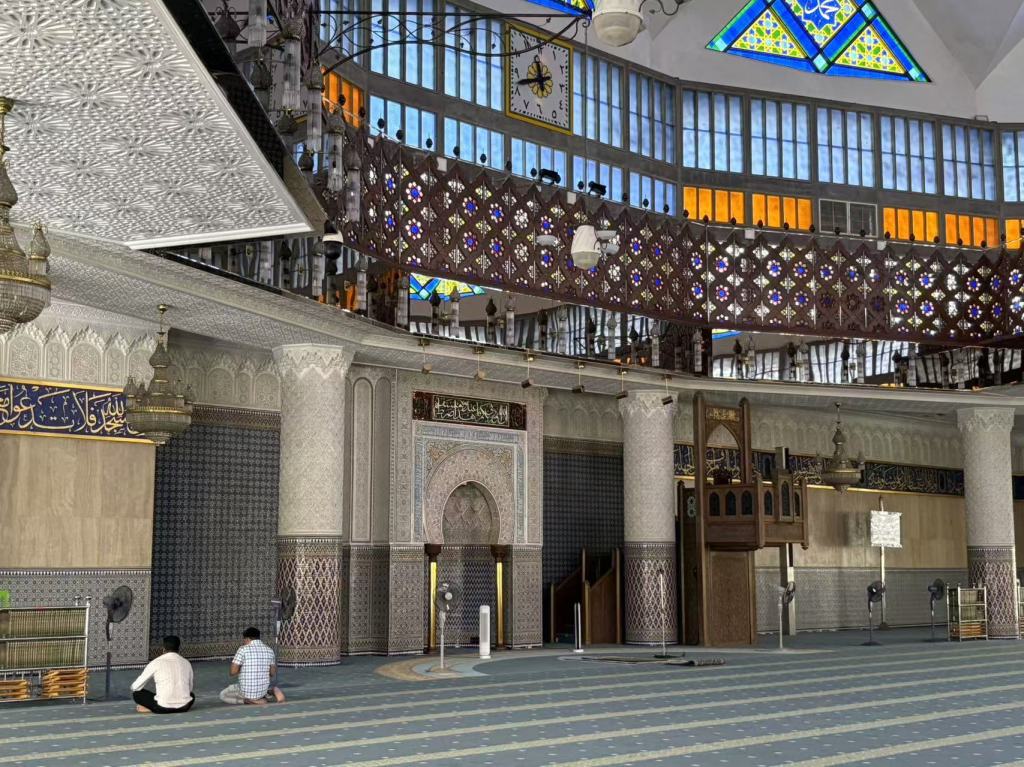
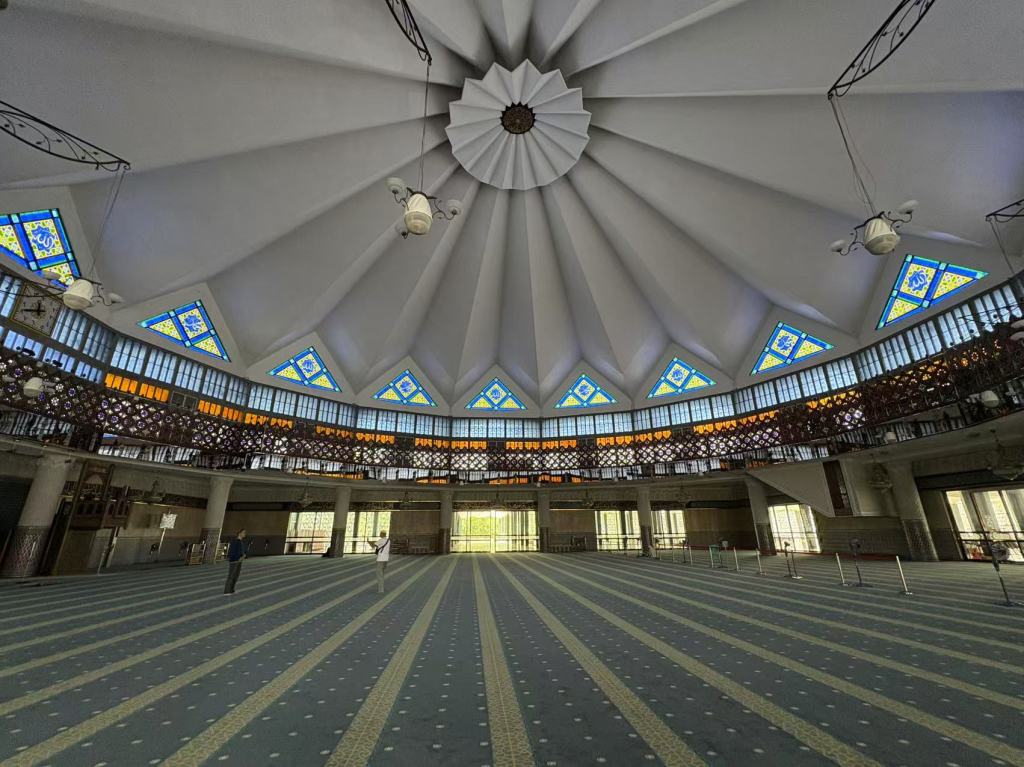
与传统伊斯兰建筑不同,国家清真寺(Masjid Negara)更具现代感,淡紫色的屋顶和几何形状的建筑线条让它在一众清真寺中显得格外独特。
Unlike traditional Islamic architecture, Masjid Negara (National Mosque) had a sleek, geometric design with a soft lavender-tinted roof.
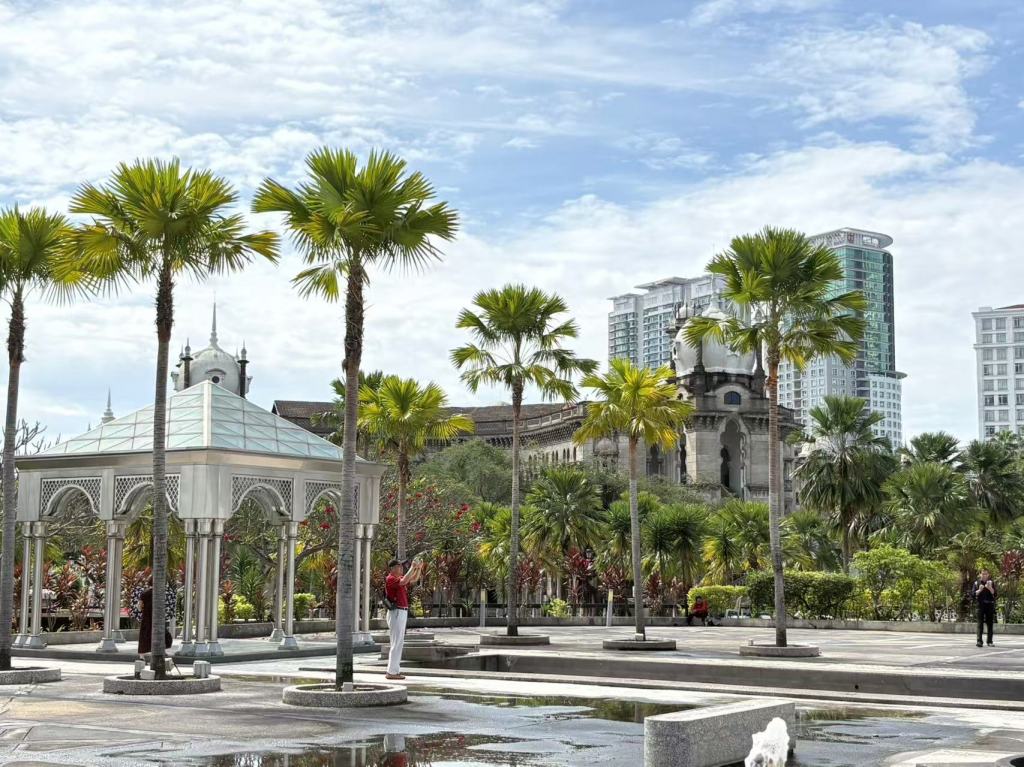
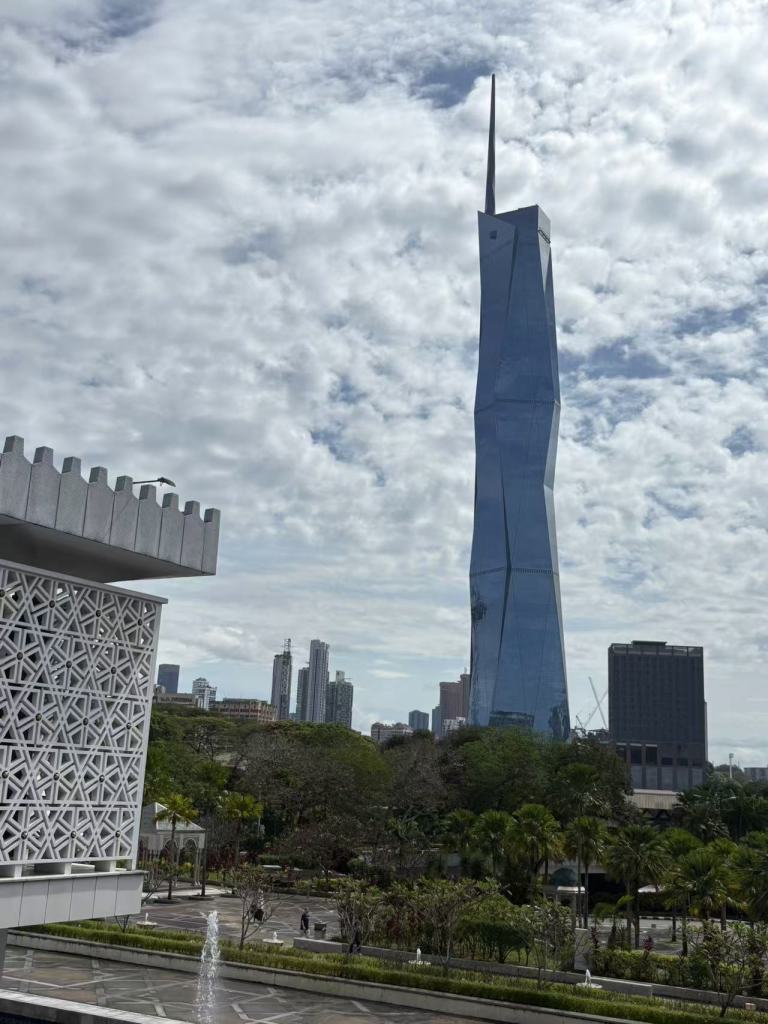
游客很多,想象中的宁静变成了拍照人潮。不过站在清真寺外,可以看到吉隆坡118大厦,这座即将成为东南亚最高的摩天楼,象征着这座城市迈向未来的速度。
It was far from tranquil, though—tourists flooded the premises, making it more of a photo hotspot than a place of reflection. But from the mosque’s courtyard, the Kuala Lumpur 118 Tower stood proudly in the distance, a symbol of the city’s rapid progress into the future.
独立广场:英殖民遗留下的风景 Merdeka Square: Echoes of Colonial History
离开清真寺,我们顺路去了独立广场(Merdeka Square)。这里曾是英国殖民者修建的皇家俱乐部草坪,如今却成为马来西亚独立的象征。1957年8月31日,马来西亚国旗首次在这里升起,标志着国家的自由诞生。
After leaving the National Mosque, we made a quick stop at Merdeka Square. Once the Royal Selangor Club’s cricket field, this historic site became the heart of Malaysian independence when the national flag was raised here for the first time on August 31, 1957, marking the birth of a free nation.


苏丹阿都沙末大厦:时间凝固的殖民遗风Sultan Abdul Samad Building: Colonial Elegance Frozen in Time
旁边的苏丹阿都沙末大厦(Sultan Abdul Samad Building),是这里最耀眼的存在。红砖外墙、摩尔式拱门、钟楼和金色穹顶,在阳光下显得庄重又优雅,仿佛穿越回19世纪的英殖民时代。如今,这里不再是殖民统治的象征,而是吉隆坡现代历史的重要见证。站在这里,看着一面面国旗迎风飘扬,历史的重量透过建筑沉淀下来,让人有些感慨。
Right next to the square stands the Sultan Abdul Samad Building, the most striking landmark in the area. With red-brick facades, Moorish-style arches, and a towering clock tower topped with a golden dome, the structure carries a stately charm that transports you back to 19th-century British Malaya. Today, it no longer symbolizes colonial rule but serves as a witness to Malaysia’s modern history. Standing here, watching the national flags flutter in the wind, you can feel the weight of the past still lingering in the air.

午餐小插曲:找不到的品香肉骨茶 & 咖啡的“陷阱”Lunch Mishap: The Elusive Bak Kut Teh & a Coffee Trap
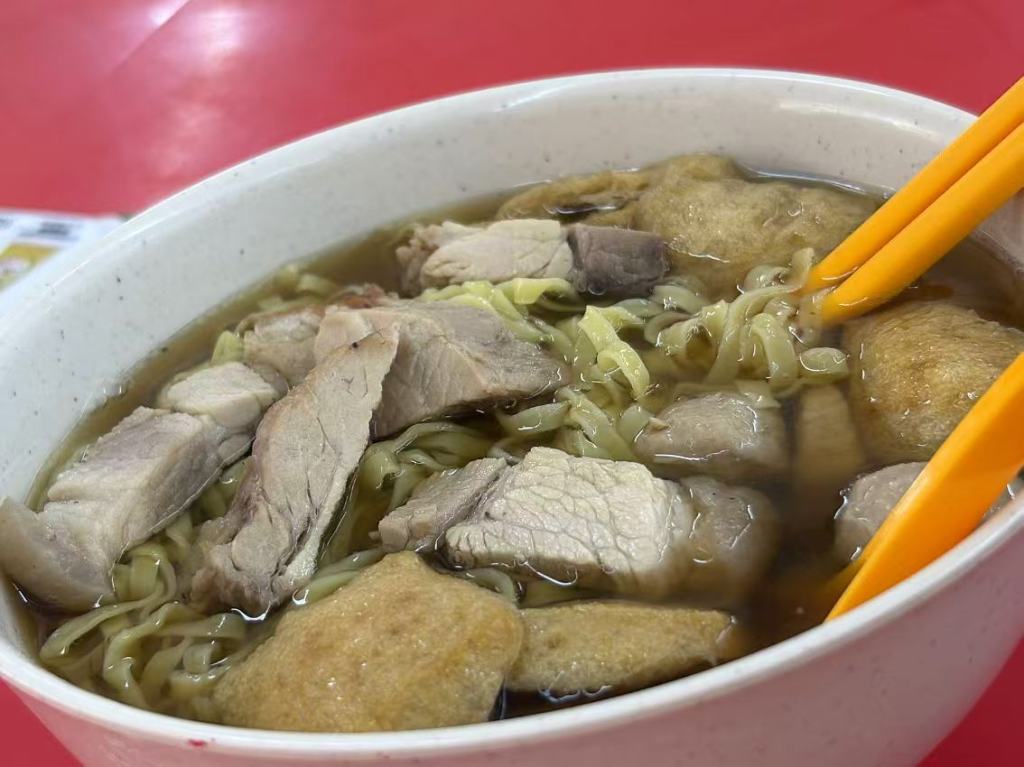
司机强烈推荐我们去吃品香肉骨茶,结果大年初一关门! 只好改去附近的food stall,点了一碗肉骨茶面。虽然不及期待中的品香,但热腾腾的汤头带着药材香,搭配软烂的排骨,依旧是一碗值得回味的地道马来味道。
Our driver enthusiastically recommended Pin Xiang Bak Kut Teh, claiming it was the best in town. But as luck would have it—it was closed for Chinese New Year! With no other choice, we settled for a nearby food stall and ordered Bak Kut Teh noodles. It wasn’t quite what we had hoped for, but the herbal broth was rich and fragrant, the pork ribs perfectly tender—a comforting taste of Malaysia nonetheless.
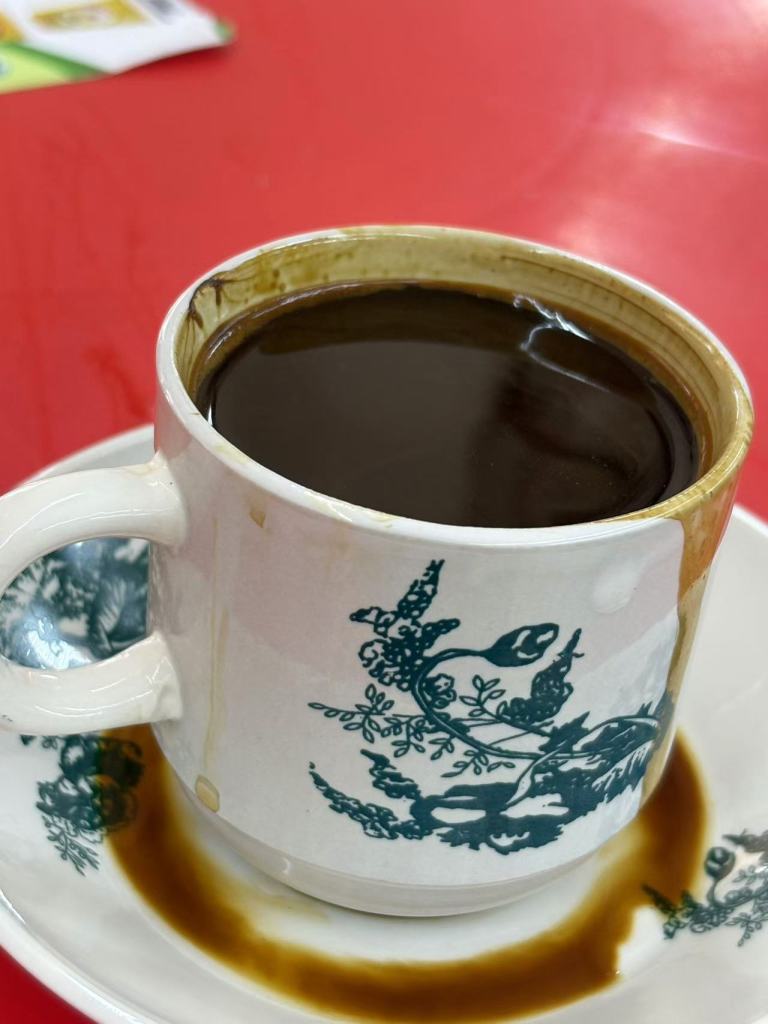
然而,点咖啡时又翻车了。以为“Kopi”就是黑咖啡,结果端上来的却是甜甜的奶咖。司机笑着解释,真正的黑咖啡要点“Kopi O”,普通的“Kopi”默认是加炼乳的。虽然这一杯比想象中甜腻,但也算是一次地道的体验,让人记住了东南亚咖啡文化的小陷阱。
Then came another small mishap—I ordered “Kopi,” thinking I was getting black coffee, only to be served a sweet, creamy milk coffee instead. Our driver chuckled and explained, “If you want black coffee, you have to say ‘Kopi O’!” Apparently, “Kopi” by default comes with condensed milk. The unexpected sweetness wasn’t bad, just different—a little cultural surprise in a cup.
Batu Caves:多巴胺色彩与野生猴子 Batu Caves: Dopamine Colors and Monkey Business
下午,我们终于来到Batu Caves(黑风洞),但堵车严重,短短几公里的路程竟然走走停停了半个多小时。
In the afternoon, we finally reached Batu Caves, though traffic was a nightmare—a few kilometers took over half an hour.
不过,一看到金色的穆鲁甘神像和彩虹台阶,所有的疲惫瞬间消散。272级台阶的饱和色彩,像是一座巨型涂鸦艺术装置,视觉冲击力十足。
But the moment we saw the golden Lord Murugan statue and the vibrant rainbow staircase, all the frustration melted away. The 272 steps looked like a giant art installation, their vivid colors providing an instant dopamine boost.

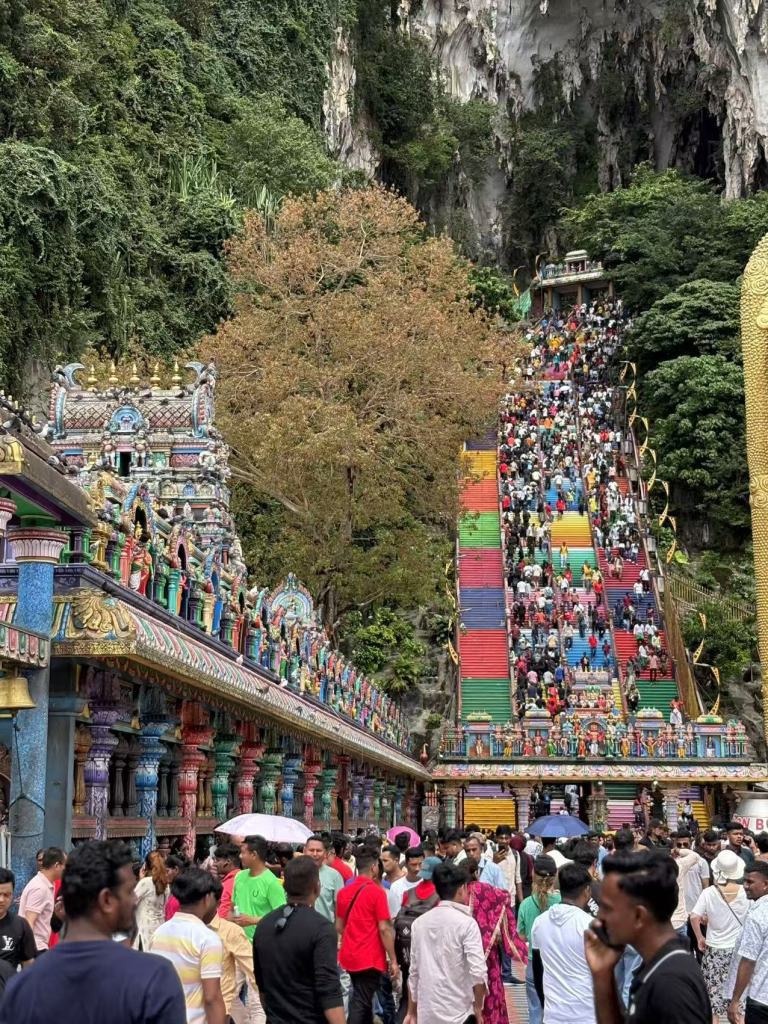
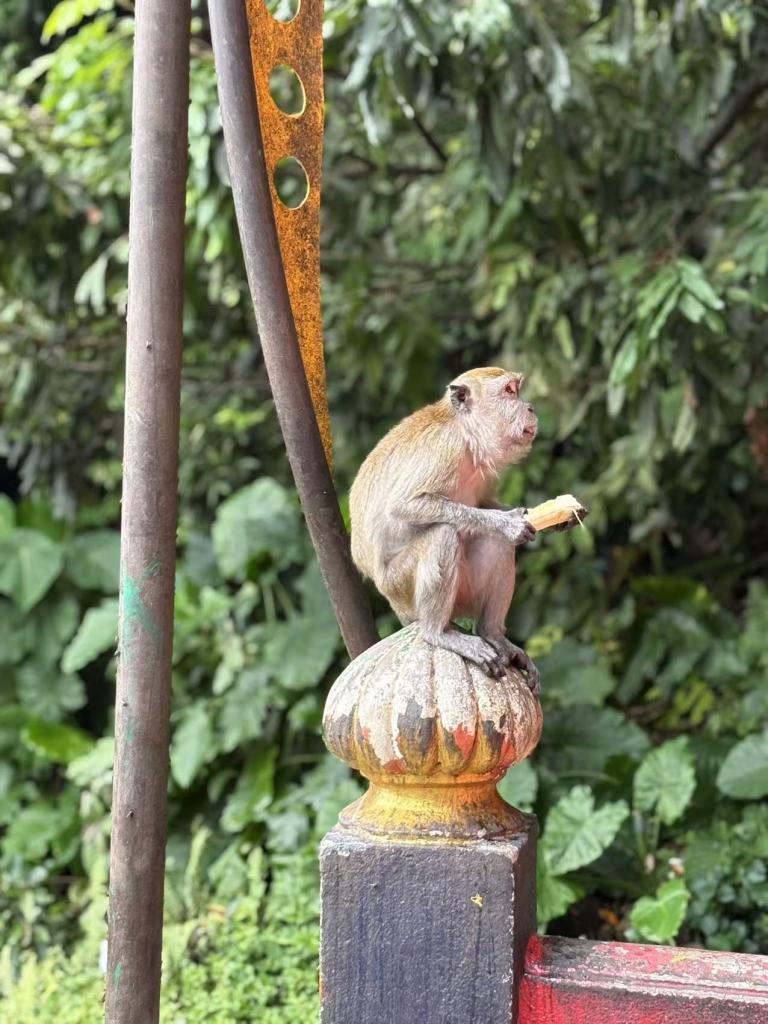
野生猴子遍布整个景区,它们是这里真正的“地主”,随时准备抢游客手中的食物,甚至手机。
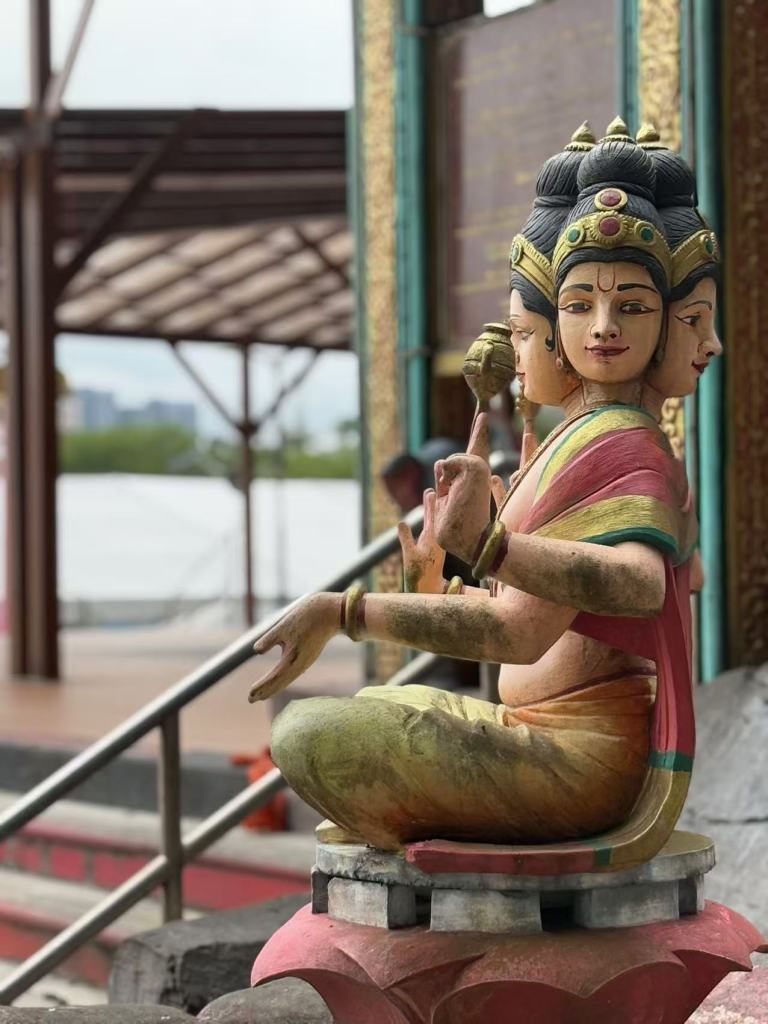
洞穴内部高耸,阳光从洞口洒下,空气中弥漫着淡淡的香火味。
Monkeys roamed freely, the true landlords of Batu Caves, ready to snatch food—or worse, your phone.
Inside the cave, towering limestone walls bathed in natural light added to its mystical aura, with the faint scent of incense in the air.
榴莲冰沙 Durian Ice Blended
司机听说我们对榴莲感兴趣,便带我们去了一个只有当地人才知道的市场旁榴莲冰沙店。马来西亚的酒店几乎都禁止带榴莲入内,不然会被罚300马币,这让我们更坚定了一定要现场品尝的决心。
端上来的冰沙不只是榴莲味,而是真·榴莲果肉盖顶! 轻轻搅拌,榴莲的绵密与冰沙的清凉混合在一起,浓郁得像一场味觉轰炸,甜而不腻,还能吃到椰糖味的煎蕊(Cendol)。无论是不是榴莲党,这一碗都足以颠覆对榴莲的刻板印象。
Hearing that we were curious about durian, our driver took us to a hidden local durian ice shop near a market. Since most hotels in Malaysia ban durians with a fine of RM300, we figured the only way to truly enjoy it was to eat it on-site.
What arrived at our table wasn’t just durian-flavored ice—it was actual durian flesh piled on top. A quick stir, and the creamy, rich durian melted into the icy blend, creating a refreshing, tropical explosion of flavors. Occasionally, we’d scoop up some cendol and palm sugar, adding even more depth to the taste. Whether you love or hate durian, this dessert will make you rethink everything you knew about it.

吃完冰沙,我们顺路打卡了双子塔(Petronas Towers)。白天看双子塔已足够震撼,但据说晚上灯光亮起后才是它最美的时刻。这次我们没登顶,因为之后几天住在附近,留待回程再体验。w
After the durian dessert, we made a stop at the Petronas Towers. Seeing it during the day was impressive enough, but we had heard that it was truly breathtaking at night when the towers

天后宫:新年里的文化交融 Thean Hou Temple: A Cultural Celebration on Chinese New Year
虽然已经有些疲惫,但大年初一,去一趟**天后宫(Thean Hou Temple)**似乎是个不错的收尾方式。然而,短短15分钟的车程,却硬生生堵了1个多小时! 司机无奈地笑着说:“马来西亚有油田,汽油便宜,邮费才2RM,所以大家都喜欢开车。”
Though exhausted, we figured there was no better way to end the first day of the Lunar New Year than by visiting Thean Hou Temple. However, what should have been a 15-minute drive took over an hour thanks to insane traffic. Our driver laughed, “Malaysia has oil fields, petrol is cheap, postage is only RM2—so of course, everyone drives!”
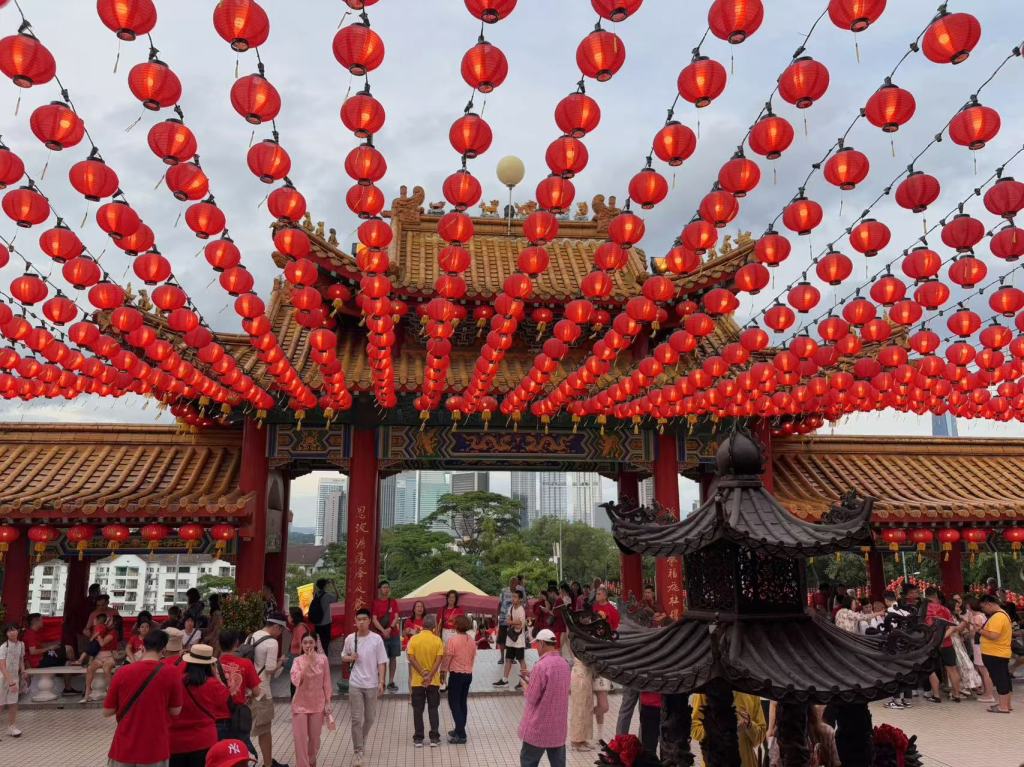
好不容易抵达,天后宫的红色灯笼海映入眼帘,充满了春节的喜庆氛围。这里融合了佛教、道教、儒家文化,是当地华人信仰的中心。进庙需要脱鞋,和清真寺一样,但上香却有些不同——这里要上4支香,而不是3支,原来宗教习俗也会随着文化迁移而发生变化。
When we finally arrived, we were greeted by a sea of red lanterns, bathing the temple in a festive glow. Thean Hou Temple is a blend of Buddhism, Taoism, and Confucianism, serving as a spiritual hub for the local Chinese community. Like the mosque, shoes must be removed before entering, but the way incense is offered is different—here, four sticks are burned instead of three, a small but fascinating cultural shift due to migration and tradition.
站在高处俯瞰,吉隆坡的夜景尽收眼底,一边是现代化摩天大楼,一边是古老的华人庙宇,这座城市的多元文化在这一刻展现得淋漓尽致。
From the temple’s balcony, Kuala Lumpur’s skyline stretched out before us, a mix of towering modern skyscrapers and ancient Chinese architecture. It was the perfect representation of the city’s rich multicultural identity.

屋顶夜景 & 阿罗街的夜宵 Rooftop Views & Jalan Alor Round 2
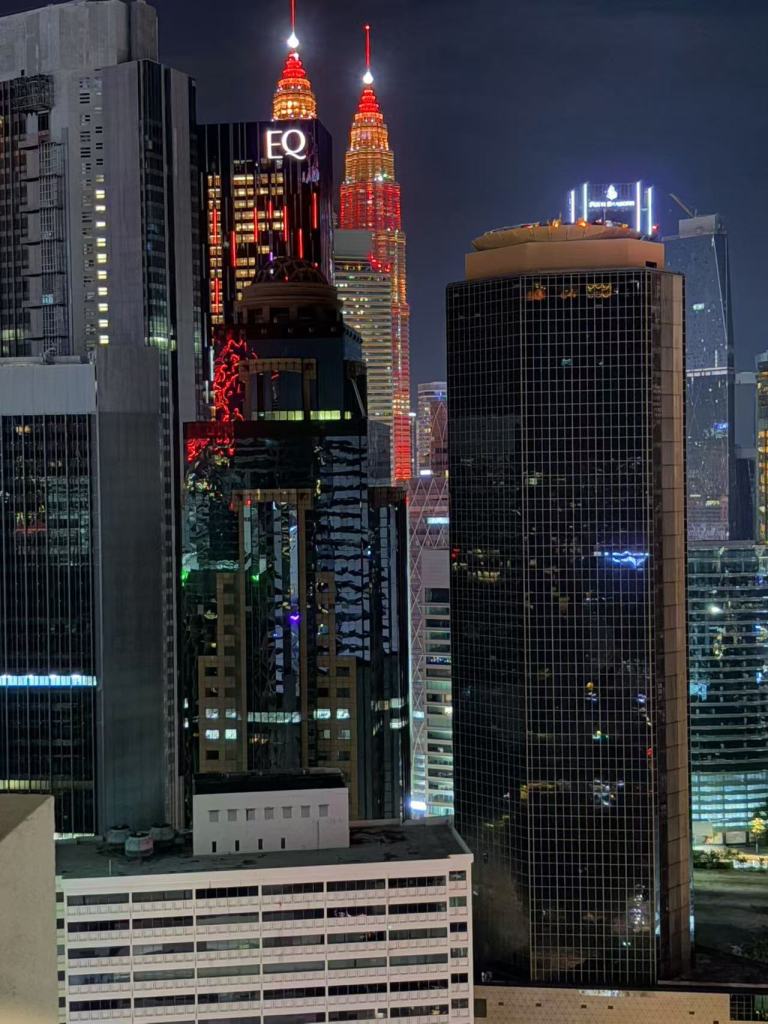
回到酒店,我们决定在屋顶泳池放松,迎着晚风游了一圈,躺在躺椅上,看着吉隆坡的灯光亮起,夜色中双子塔依旧耀眼。
Back at the hotel, we relaxed in the rooftop pool, floating under the city lights with the iconic Petronas Towers shining in the distance.

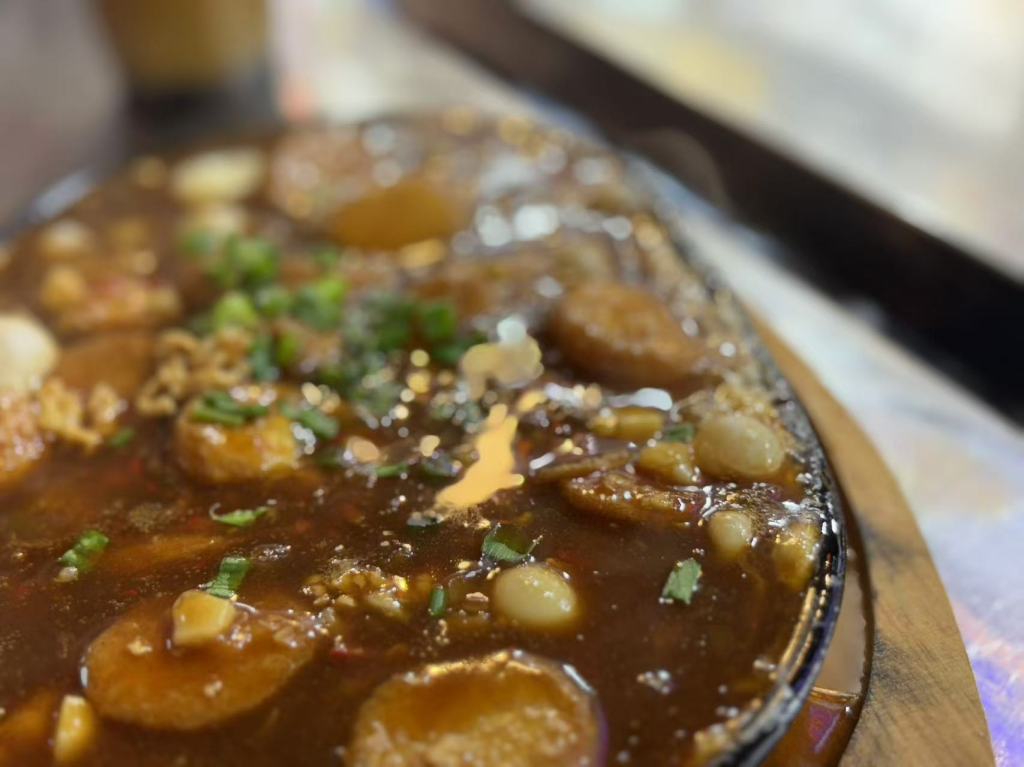
不过,夜晚的吉隆坡总是充满诱惑,休息了一会,我们又去了阿罗街,这次尝试了石甲鱼,鱼肉嫩滑,配上蒜蓉辣椒酱,鲜味十足。
But KL’s nightlife was too tempting to ignore, so we headed back to Jalan Alor. This time, we tried marble goby fish, tender and flavorful, paired with a garlic chili sauce that gave it an extra kick.



这一整天,充实,累,像是回到了年轻时的旅行模式……A Day That Was Full, Exhausting, and Felt Like Traveling in Our Youth…
从晨光中的皇宫到夜晚的屋顶泳池,步数和热量摄入双双爆表,疲惫却满足。旅途的意义大概就是这样——奔波中感受文化交融,在味蕾的惊喜里发现偏爱。瘫倒在床上的瞬间,脑海里还闪烁着吉隆坡的灯光、街头的烟火气,还有那碗冰凉的榴莲冰沙。
From the golden palace at sunrise to the rooftop pool at night, we maxed out on steps and calories—exhausted but fulfilled. This is what travel is about—soaking in culture on the move, finding new favorites through food. Even as we collapsed into bed, our minds were still lit up with KL’s city lights, street-side energy, and that unforgettable durian ice dessert.
 小杰与小吉——JZ World Travel
留下评论