August 3, Monday 8月3日,周一
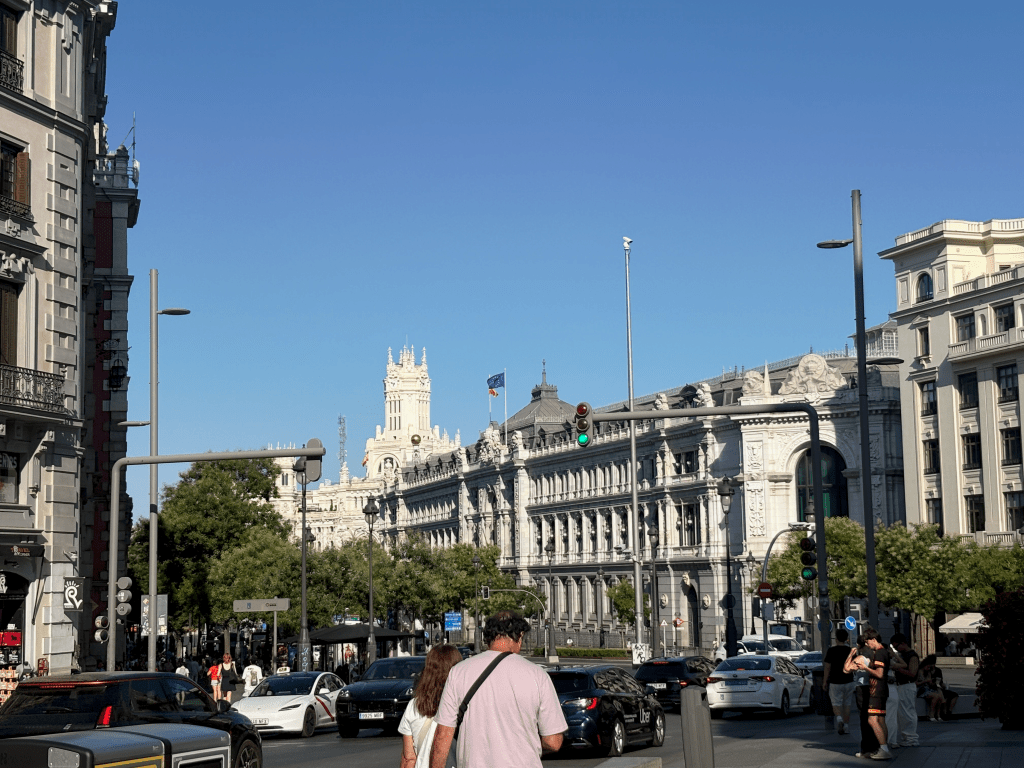
We flew from Paris Charles de Gaulle Airport in the afternoon and arrived in Madrid after a two-hour flight.
Since we had an early train to León the next morning, we decided not to stay in the city center, but at a hotel near Chamartín Station. The hotel was conveniently connected to the station’s shopping complex — modern, comfortable, and perfect for a short overnight stay.
After dropping off our luggage, we headed straight to the Museo del Prado.
下午从巴黎戴高乐机场起飞,经过2个小时的飞行,抵达马德里。
因为第二天一早要搭乘火车前往 León,因此没有住在市中心,而是选择了 Chamartín 火车站附近的酒店。酒店就在火车站连体的商场里,现代、舒适,对于只住一晚的我们来说非常方便。
放下行李后,我们便直奔 普拉多博物馆(Museo del Prado)。
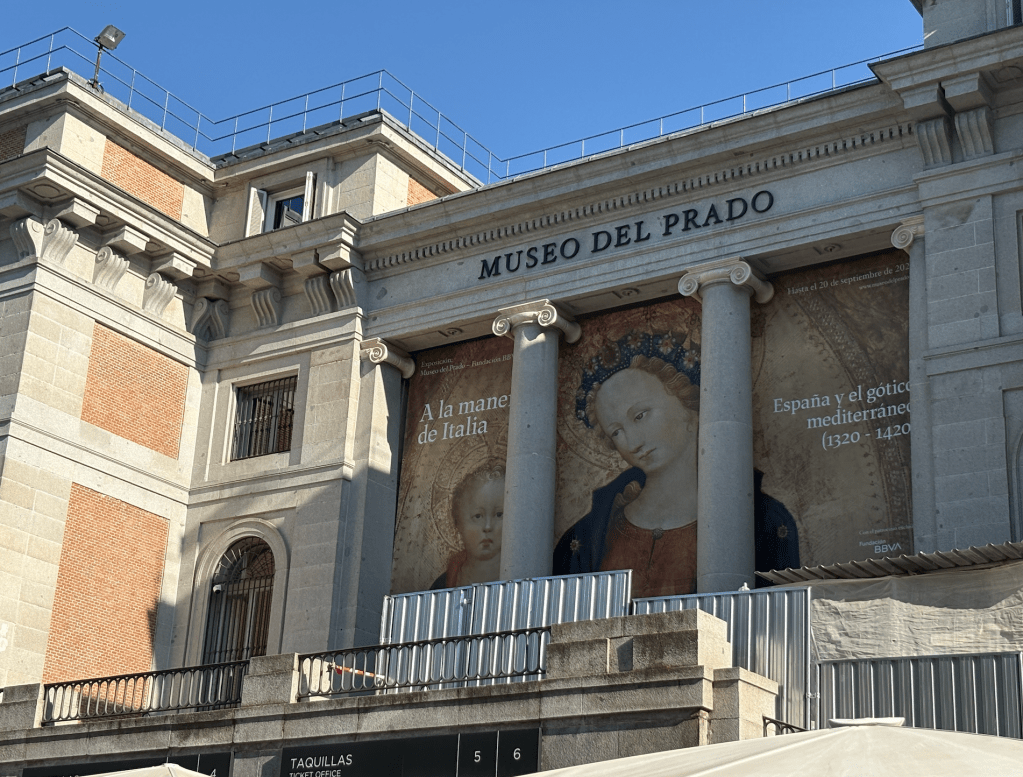
Prado Museum After 6 PM
Arriving in the early evening meant there was no way we could take our time and properly explore the entire museum. Luckily, the Prado offers free admission after 6:00 pm, which made it perfect for a quick visit like ours — a strategic “later arrival” tour rather than a serious museum marathon.
因为是傍晚到达,要静下心来完整逛完博物馆显然是不可能的。好在 Prado 博物馆 18:00之后免费开放,非常适合我们这种 later arrivals——不求完整,只做一次有策略的“走马观花”。
As Spain’s most important national art museum, the Prado houses more than 8,000 paintings and an extraordinary collection of European art from the 14th to the 19th centuries. It is particularly renowned for the works of Spain’s three great masters: Velázquez, Goya, and El Greco.
With a little help from AI recommendations and travel guides, we went straight for some of the museum’s most famous works. Among them, Goya’s paintings left the deepest impression.
Unlike the solemnity often associated with traditional religious art, Goya’s work seems to speak directly about human nature.
作为西班牙最重要的国家美术馆,普拉多馆藏超过八千件绘画作品,收藏了欧洲14至19世纪最具代表性的艺术珍品,其中以西班牙三大巨匠——委拉斯开兹(Velázquez)、戈雅(Goya)和格列柯(El Greco)最负盛名。
经过 AI 的推荐和攻略,我们非常有战略地直奔一些知名展馆的代表作。其中最让我印象深刻的,还是戈雅的作品。
相比传统宗教题材的庄严,戈雅的作品更像是在讲述真实的人性。
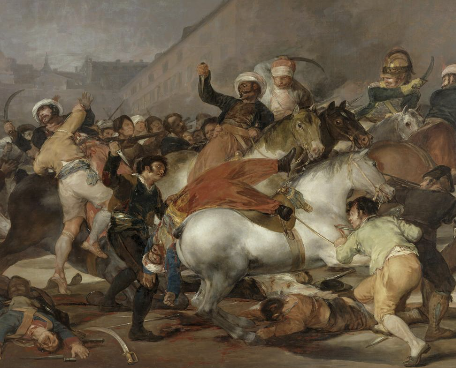
The first two paintings we encountered were The Second of May 1808: The Charge of the Mamelukes and The Third of May 1808: The Execution of the Defenders of Madrid.
The first depicts the uprising in the streets of Madrid, where ordinary citizens took up knives and weapons and fought against French cavalry. There is no glorification of war or traditional heroic imagery. Instead, there is chaos, blood, fear, and anger.
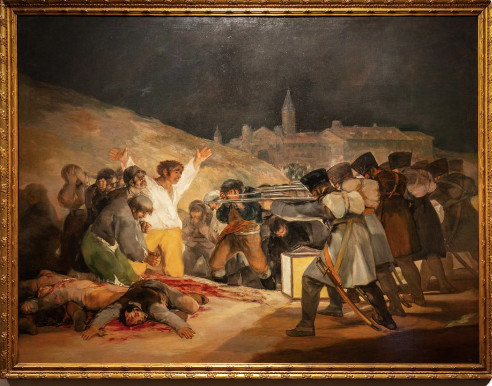
The second painting depicts the brutal aftermath of the uprising. French soldiers stand with their backs to us, their rifles aimed at a group of Spaniards about to be executed.The second painting depicts the brutal aftermath of the uprising. French soldiers stand with their backs to us, their rifles aimed at a group of Spaniards about to be executed.
首先看到的是 《1808年5月2日:马德里起义》 和 《1808年5月3日:枪决》。
第一幅描绘的是马德里街头的起义。普通市民拿起刀剑,与法国骑兵展开混战。画面没有传统战争画里的英雄主义描绘,只有混乱、鲜血、惊恐和愤怒。
第二幅则是起义后的清算。法国士兵背对观众,举枪瞄准即将被处决的西班牙人。
One painting is about resistance; the other is about death.
As visitors arriving from France, seeing the invasion and its aftermath portrayed so vividly through the eyes of a Spanish painter was a strangely emotional experience.
Hundreds of years have passed, and history has long since moved on. Yet whether on the side of the invader or the invaded, ordinary people are ultimately the same — they all want peace.
一幅画反抗,一幅画死亡。
作为从法国而来的游客,看到几百年前的这段历史,从西班牙画家的眼中如此生动地呈现在眼前,心里有一种说不出的复杂。
几百年过去,无论是侵略国,还是被侵略国,普通人民其实都是一样的——渴望和平。
The work I found hardest to forget was Saturn Devouring His Son.
Painted during Goya’s later years, when he had withdrawn into his country house, the painting is filled with oppression, madness, fear, and despair. Standing in front of the original, you begin to understand what made Goya so extraordinary.
He was not simply painting a mythological story. He was exposing the darkest side of human nature, almost brutally, right in front of you.
Photography is not allowed inside the museum, so the images above are screenshots found online.
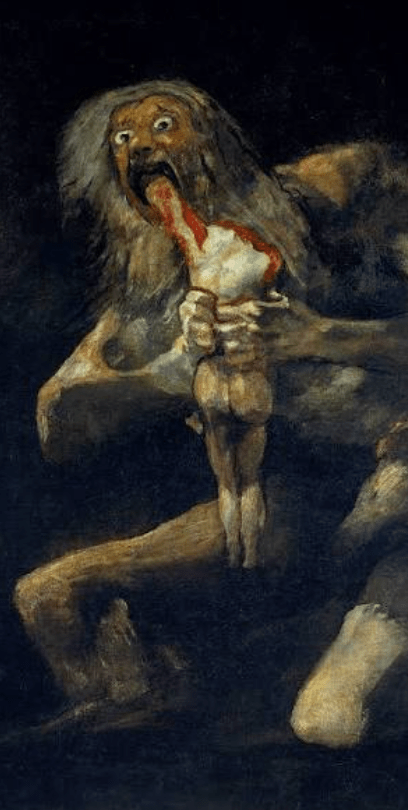
最令人难以忘记的,是 《农神吞噬其子 Saturn Devouring His Son》。
这是戈雅晚年隐居乡间时创作的作品,压迫、疯狂、恐惧、绝望几乎扑面而来。站在真迹前,你会更加理解戈雅的伟大——他画的不只是神话,而是把人性最黑暗的一面赤裸裸地展现在眼前。
博物馆中的画作不能拍照,以上图片均为网络截图。
Dinner, Apero, and Madrid’s Evening Energy
After our artistic immersion, our stomachs began demanding attention.
We stopped at a well-reviewed restaurant near the museum, only to discover that Spanish dinner time is considerably later than what we were used to. So we ordered a few tapas to keep us going, saving room for the second round of food later that evening.
我们来到博物馆附近一家评价还不错的餐厅。进餐厅之后才发现,西班牙的晚饭时间确实比我们习惯的要晚很多,于是先点了几个 tapas 垫垫肚子,把胃口留给之后市场里的第二场美食。
Mercado de San Miguel
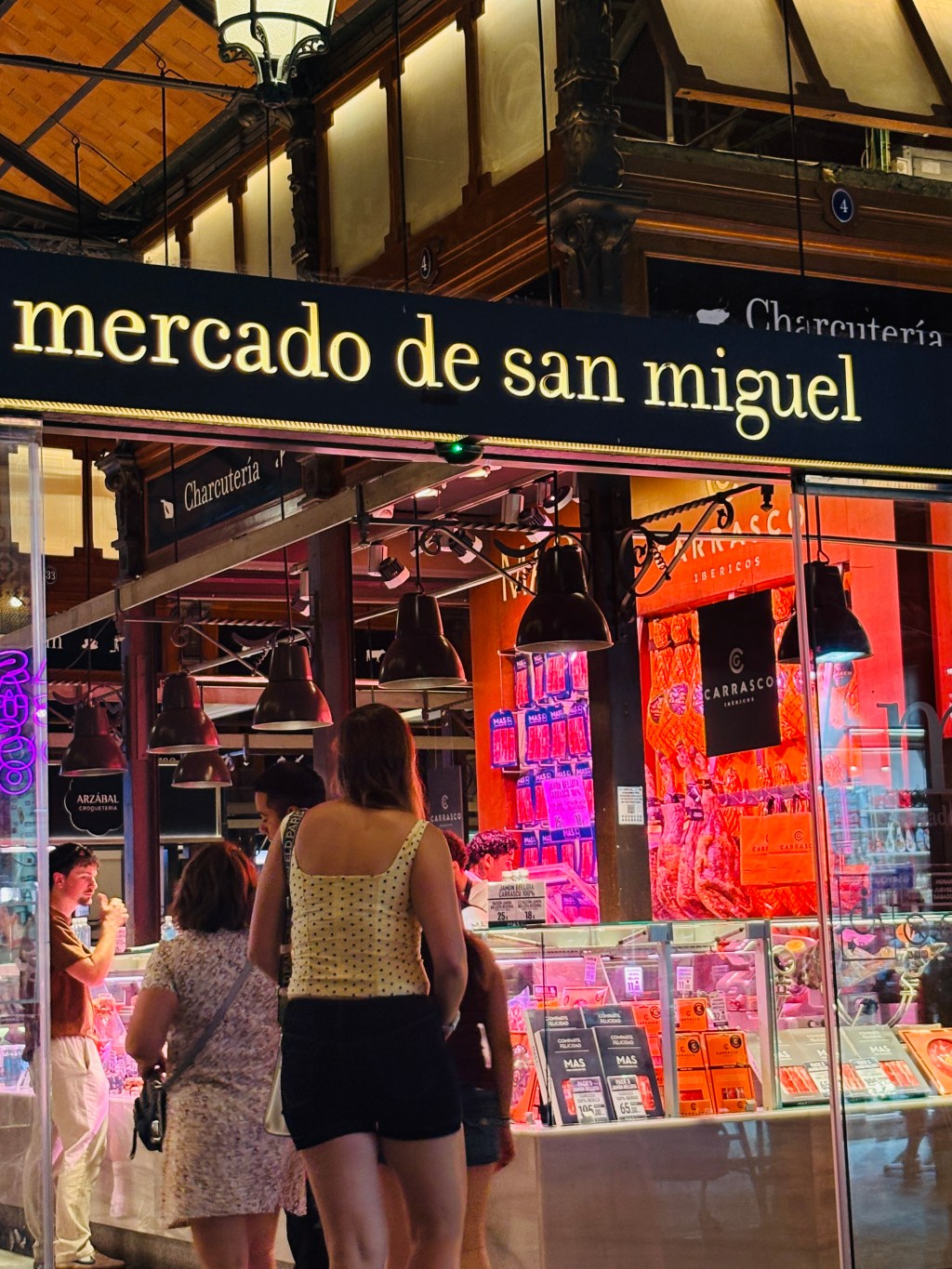
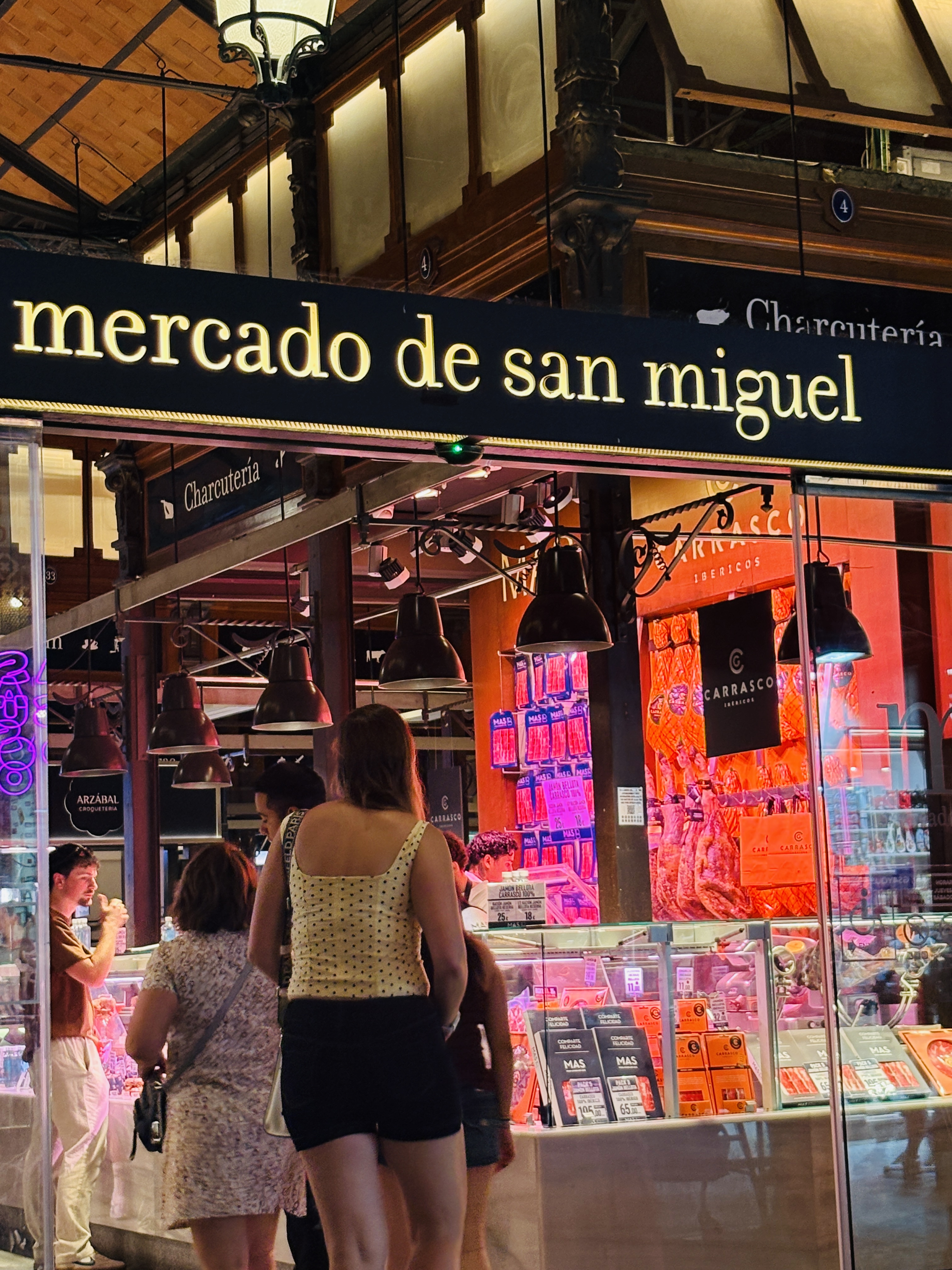
Our next stop was Mercado de San Miguel, one of Madrid’s must-visit destinations.
Like many famous markets around the world, it is no longer really a traditional food market. It is better described as a large-scale food hall and culinary attraction.
Inside its beautiful century-old iron structure, you’ll find everything from tapas, oysters, Iberian ham and seafood to desserts and wine bars. Visitors from all over the world wander between the stalls with glasses in hand, and the whole place feels like a party that never quite ends.
接下来是 Mercado de San Miguel,马德里必打卡的目的地。
和很多城市一样,如今这里已经不再是传统意义上的菜市场。准确地说,它更像是一个大型美食游览馆。
上百年的铁艺建筑里,聚集着各式 Tapas、生蚝、伊比利亚火腿、海鲜、甜点和葡萄酒吧。来自世界各地的游客端着酒杯,在不同摊位之间穿梭,整个市场热闹得像一场永不散场的派对。
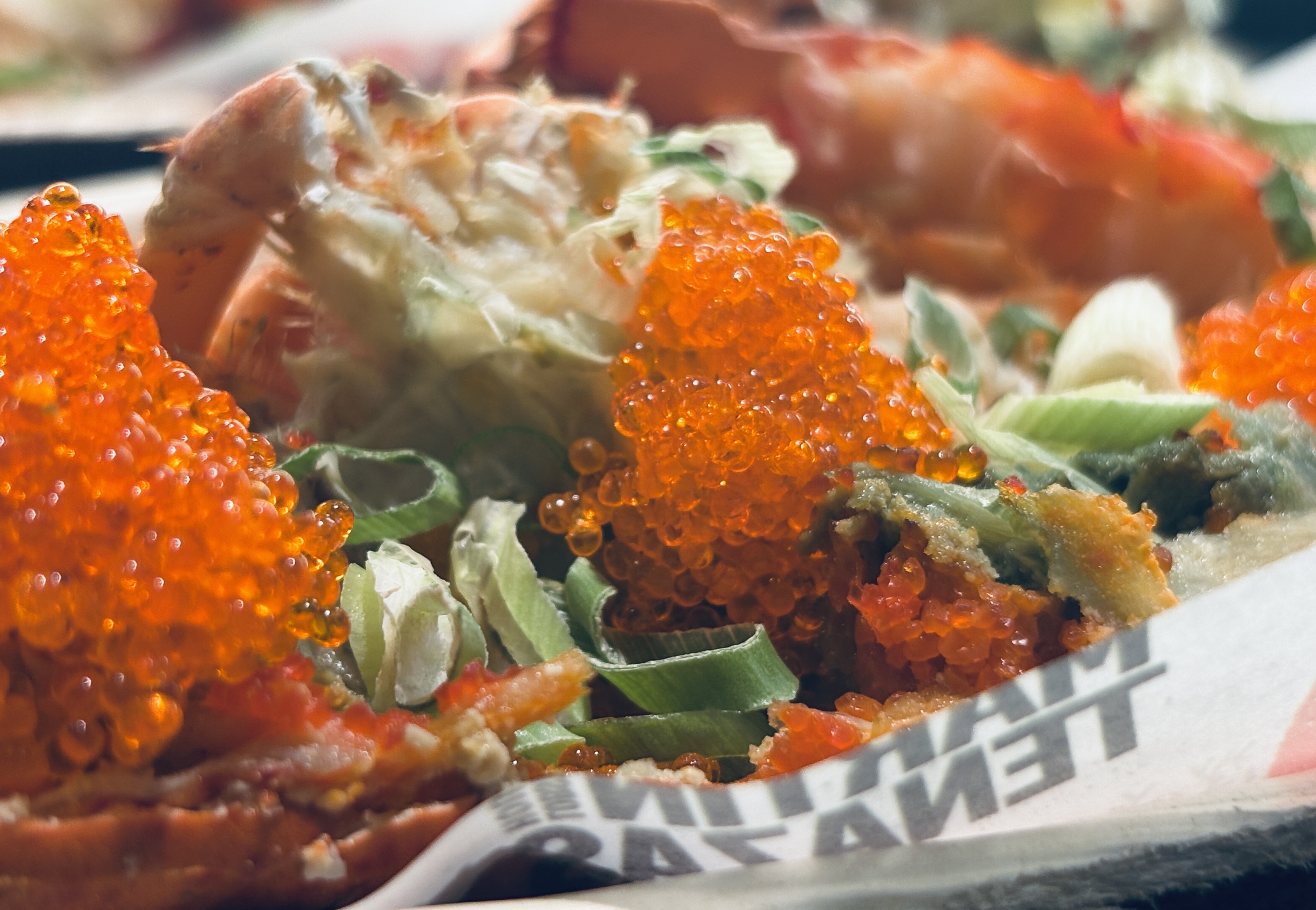
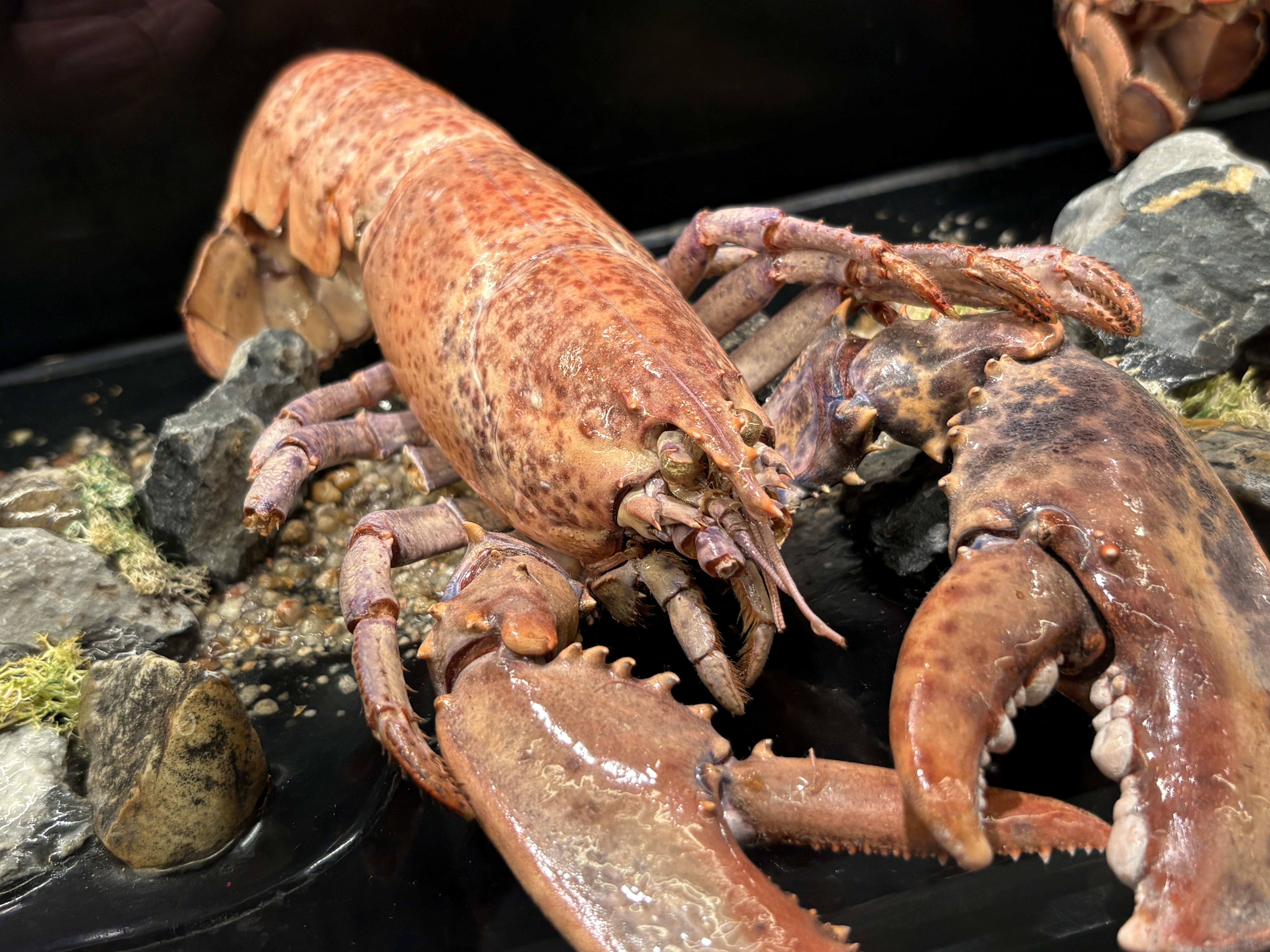
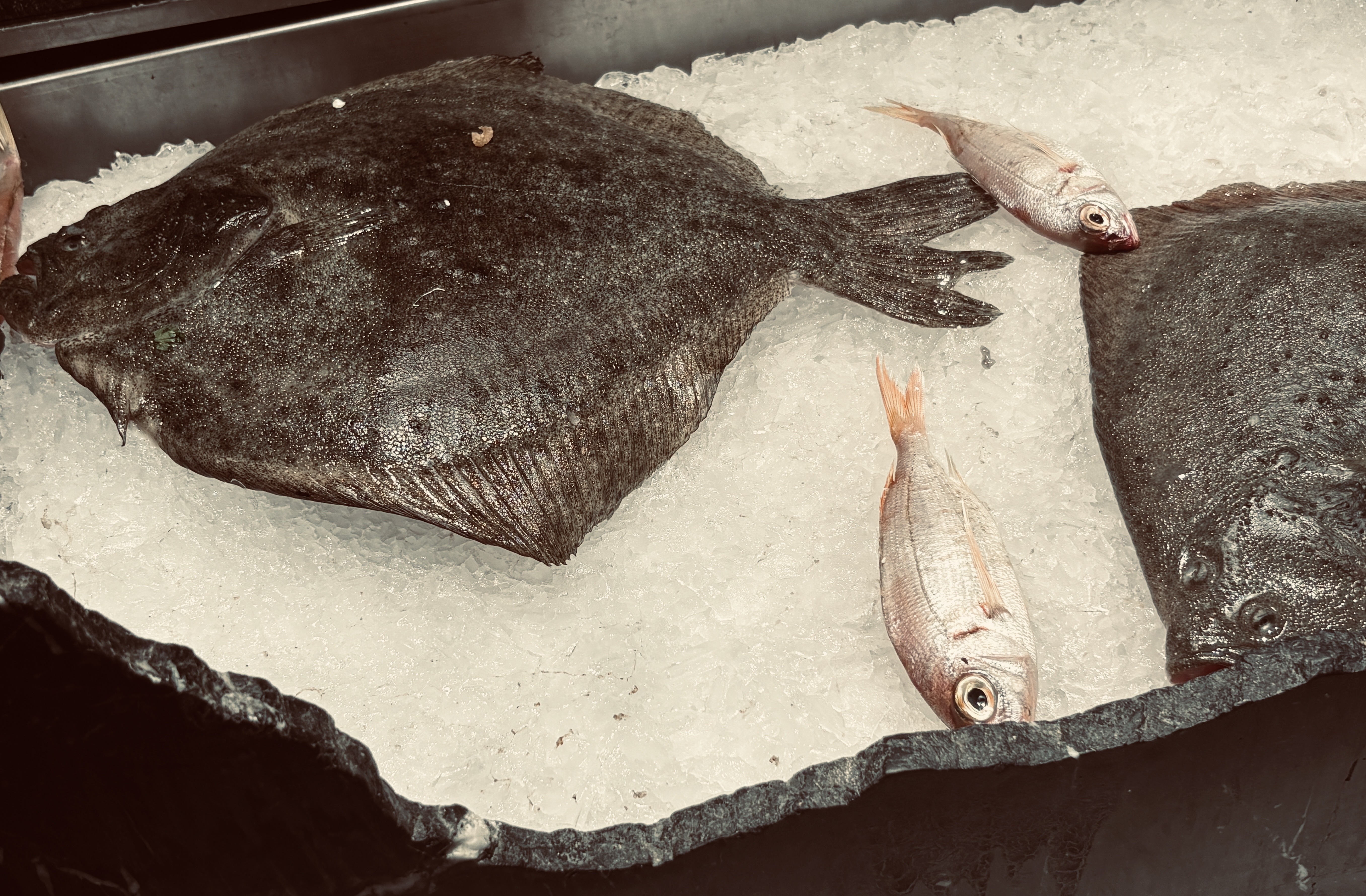
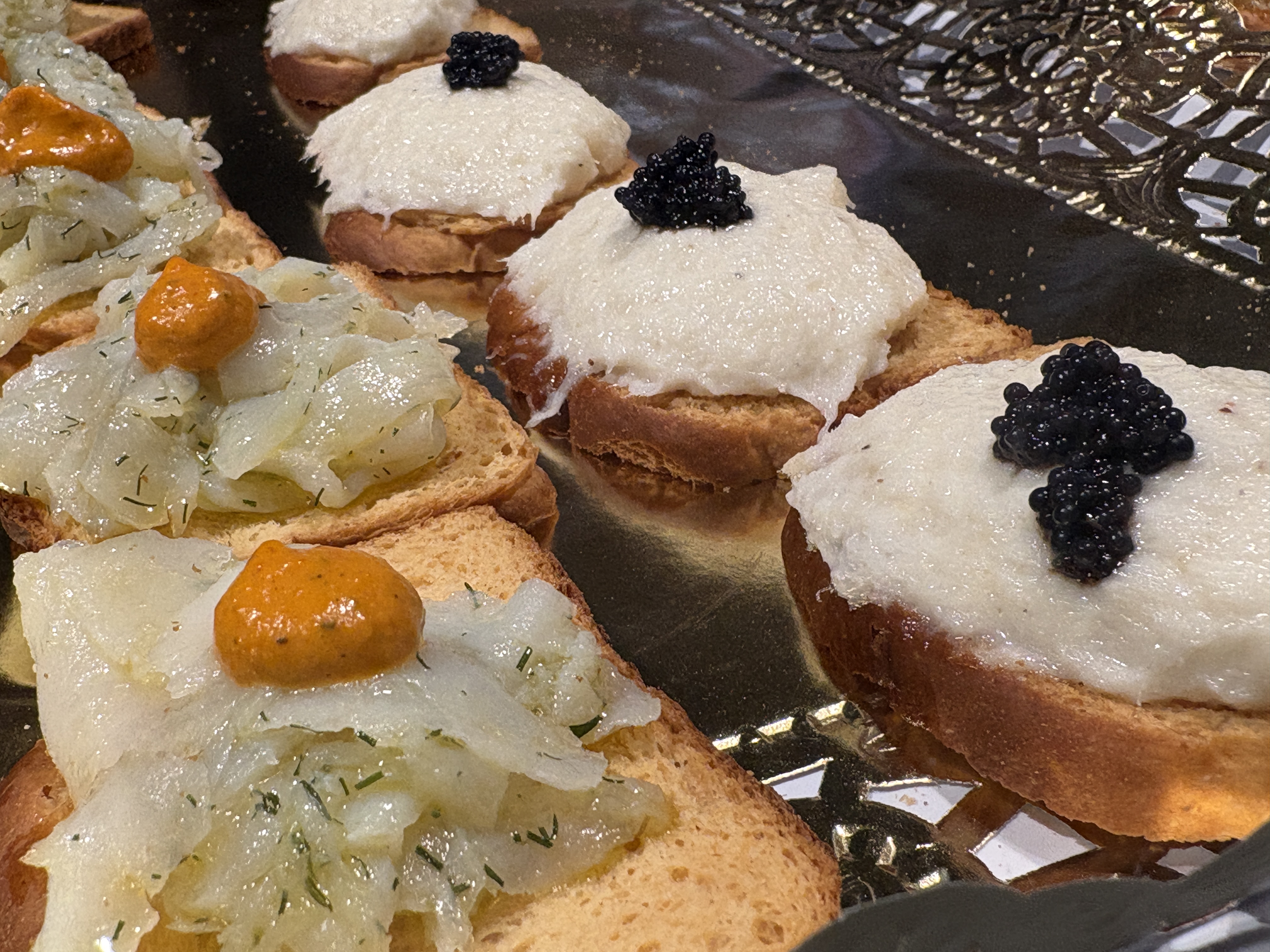
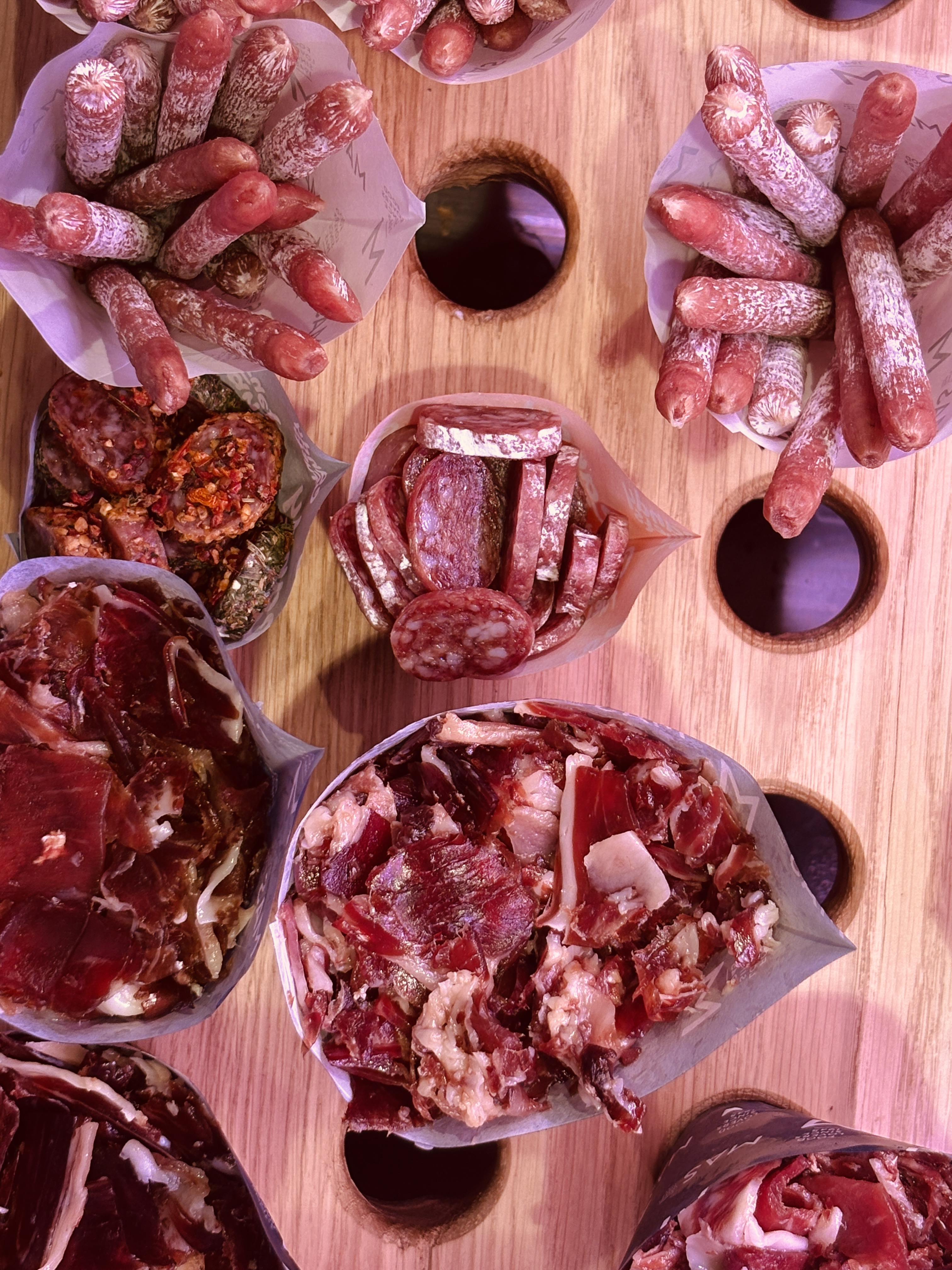
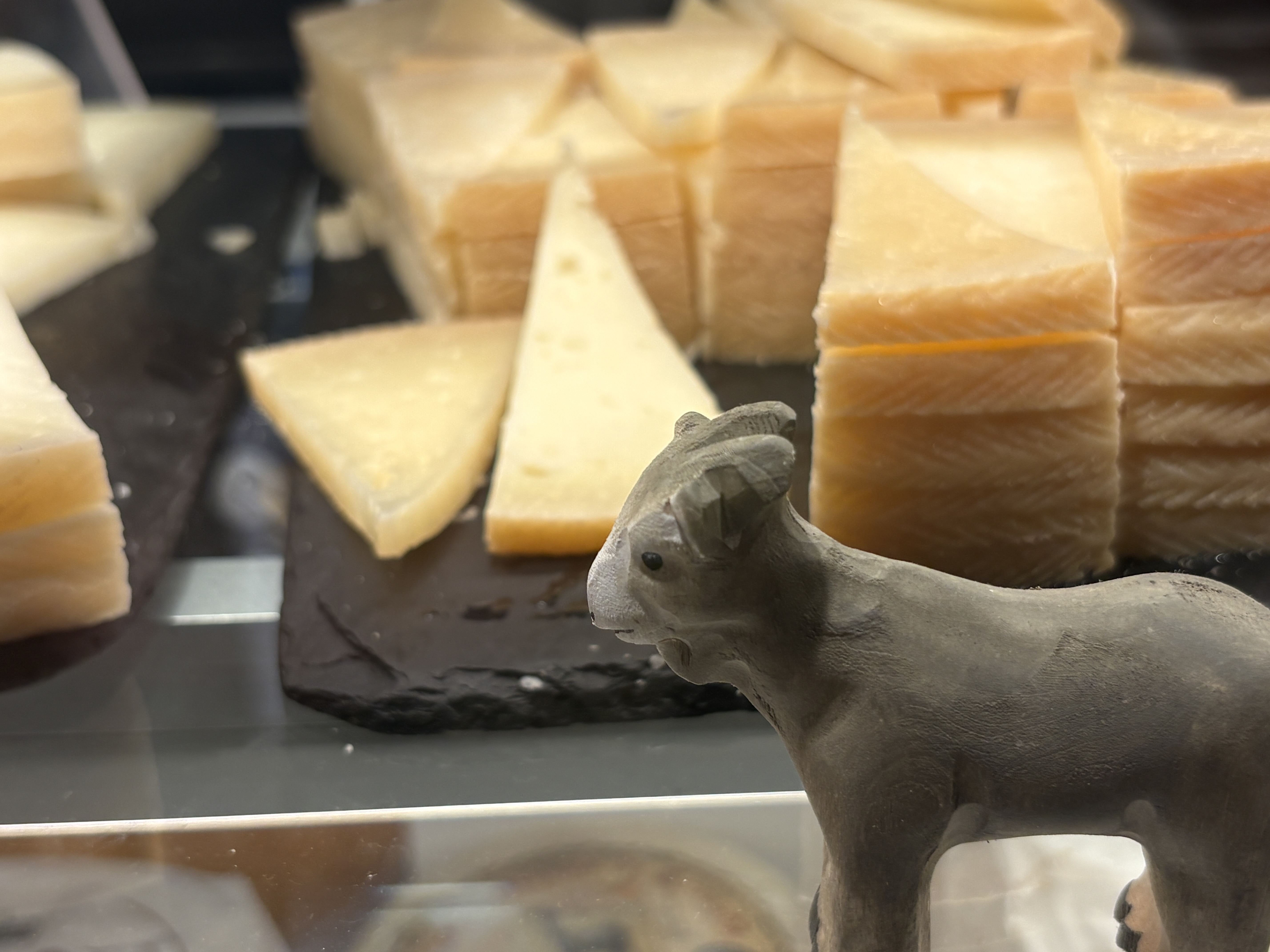
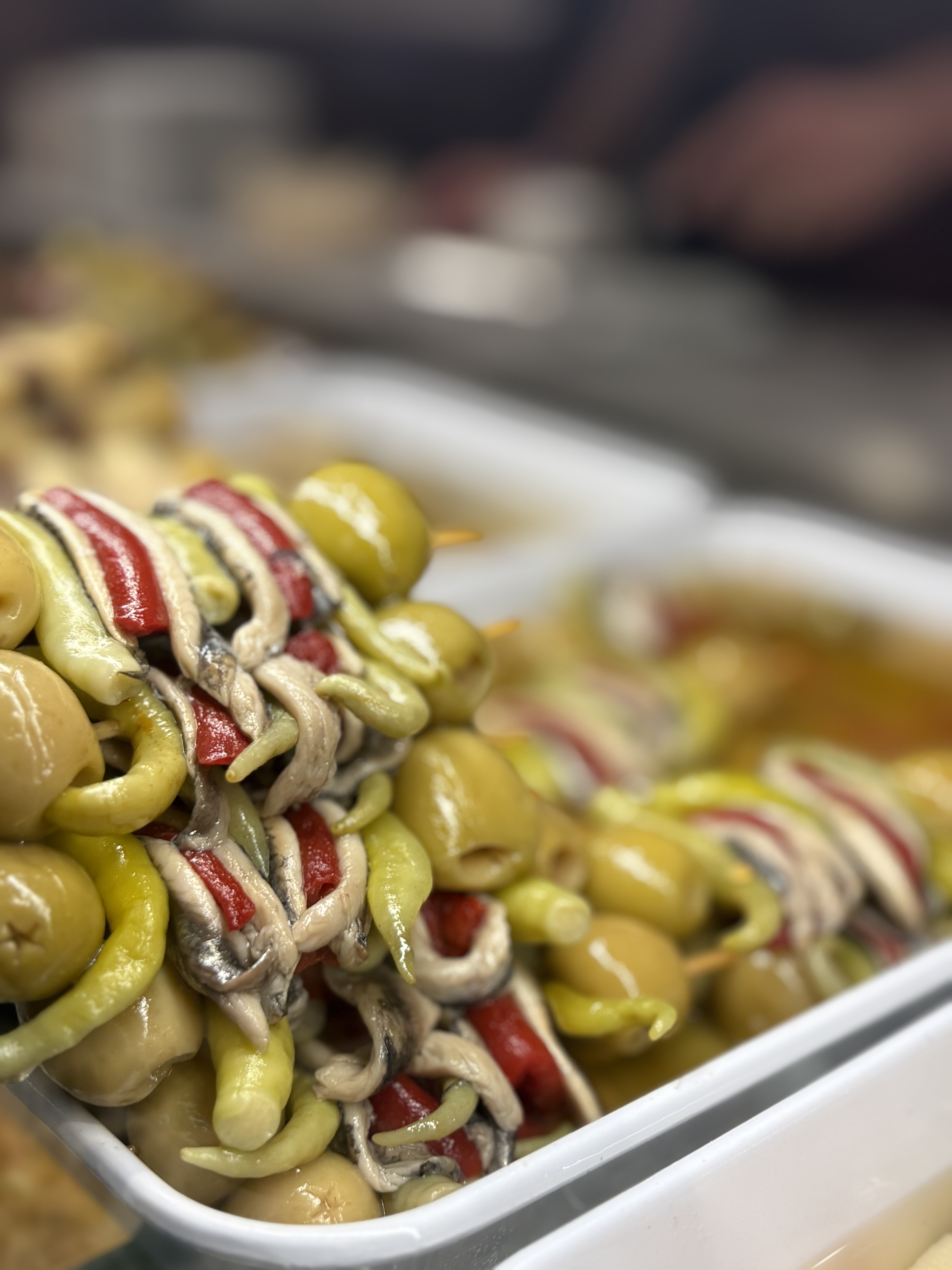
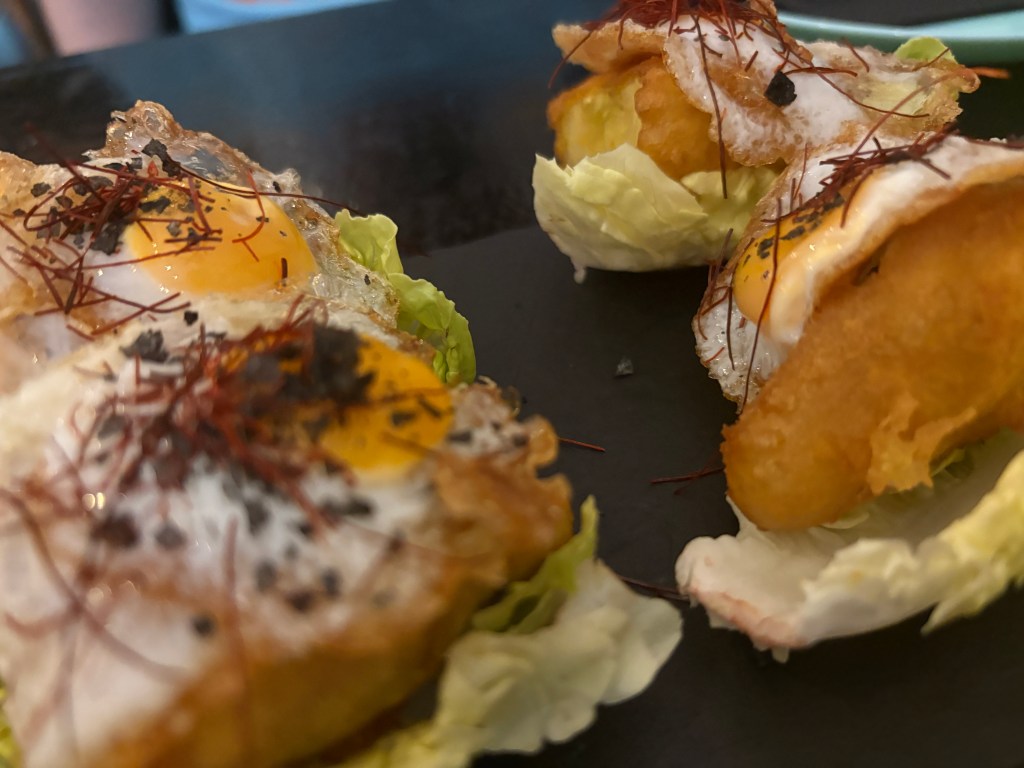
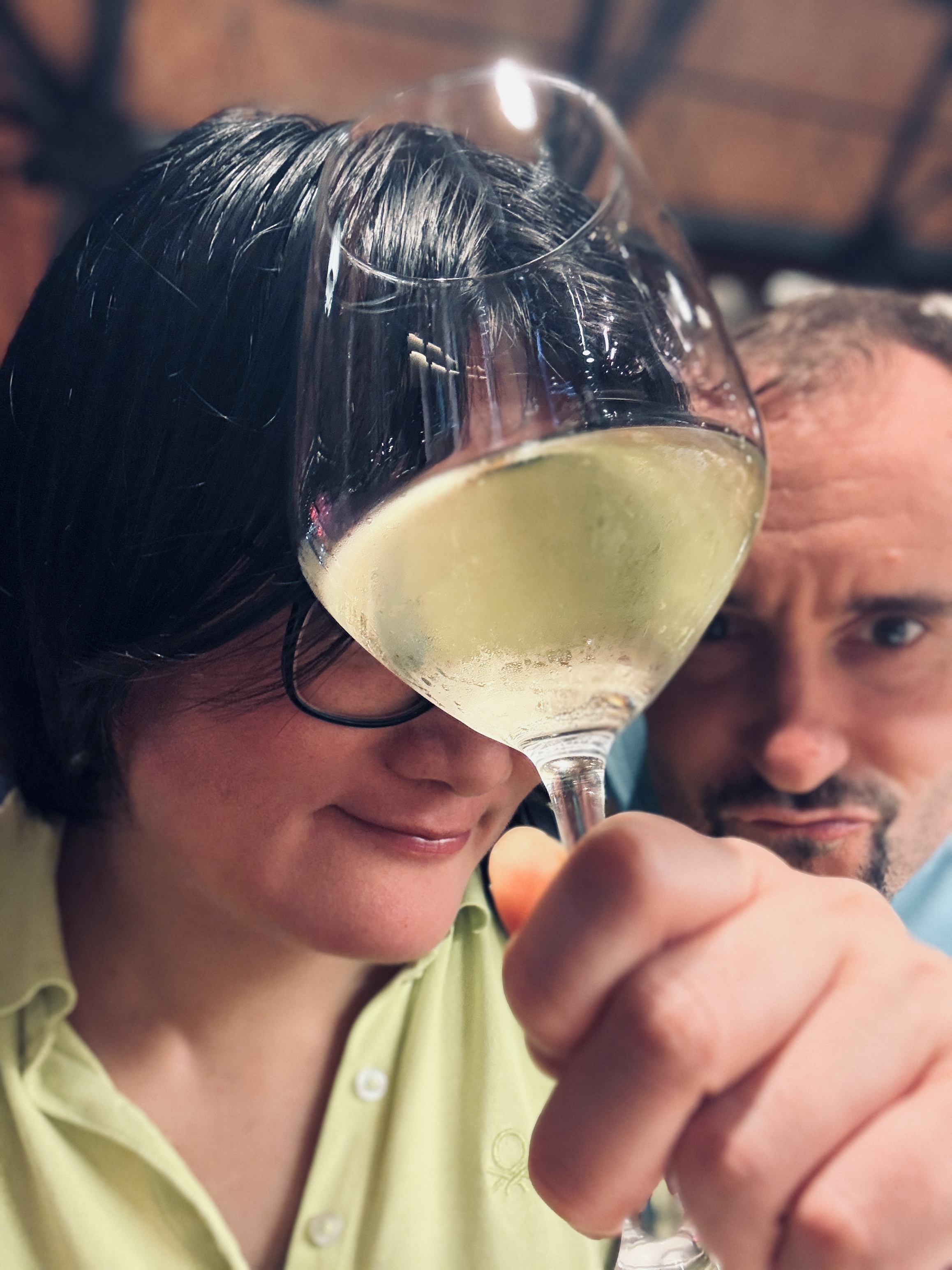
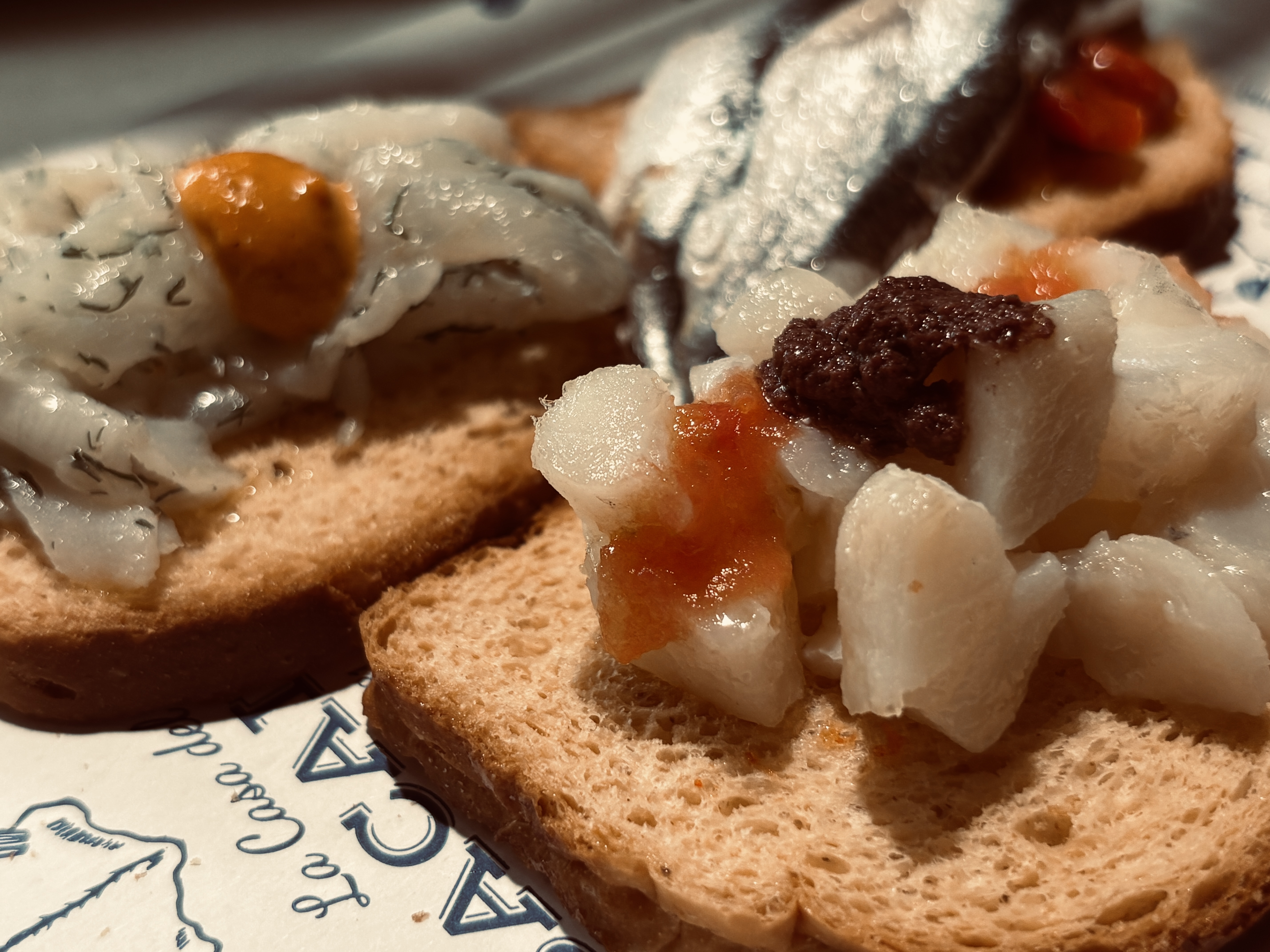
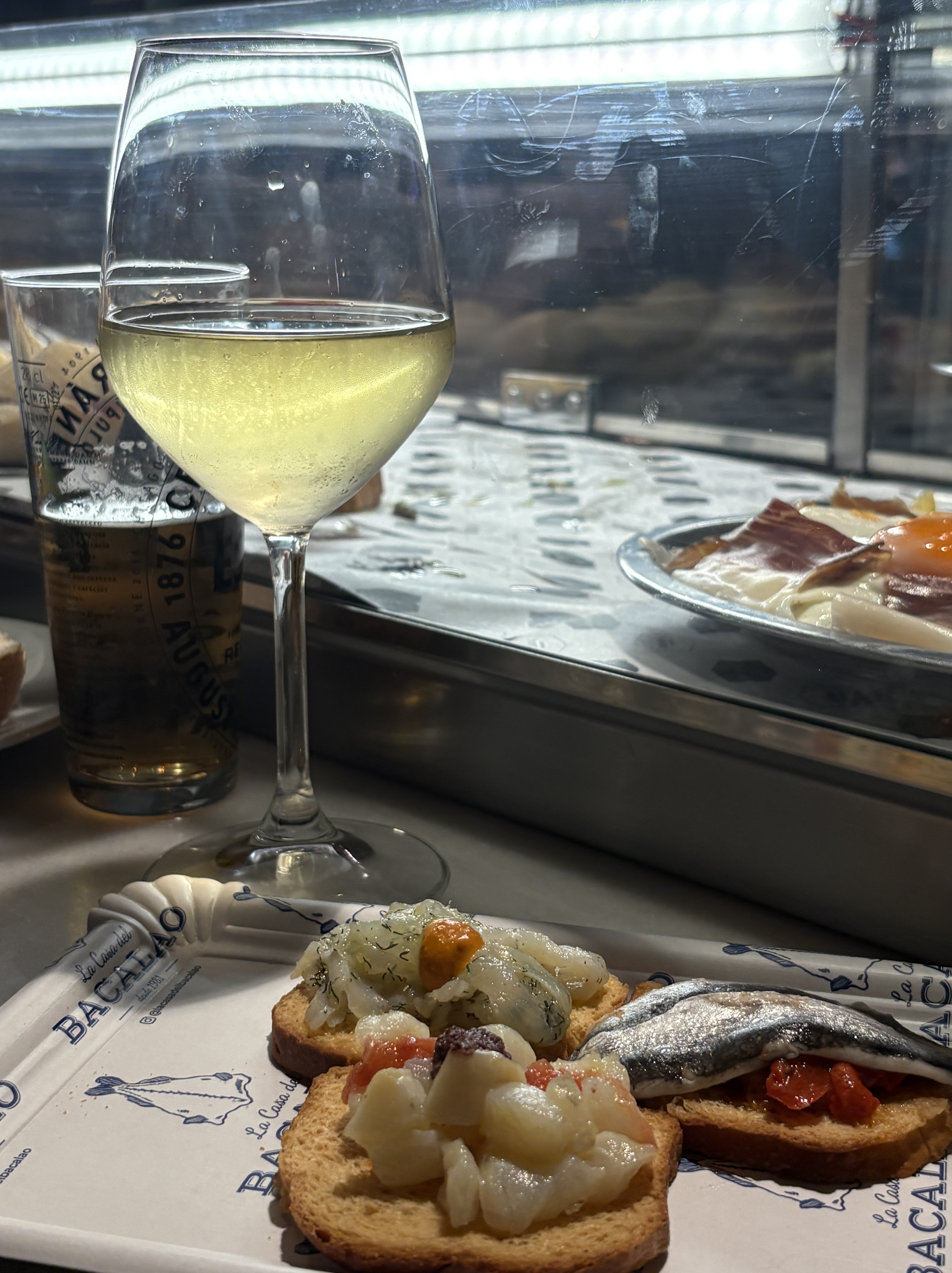
We picked up a few small dishes and a glass of Godello.
Eating standing up, drinking standing up — no elegant dining room, no elaborate table setting. Yet somehow, this felt much closer to the everyday rhythm of Madrid.
我们点了一些小食,再配上一杯 Godello。
站着吃、站着喝,没有精致的餐桌,也没有复杂的仪式感,却反而有一种非常鲜活的生活气息。
After dinner, we bought some breakfast for the next morning at the market and headed back to the hotel.
Tomorrow, the real Spanish wine country journey begins.
晚餐结束,顺便在市场买好了第二天的早点,准备回酒店休息。
明天,正式开启我们的西班牙酒乡之旅。


发表评论